We took a train from Frankfurt and changed trains in Bingen. A man who had been selling things on the train got off, too. When I took a picture of him, he seemed happy. I had heard that people in Germany can be quite particular about being photographed, so I was happy that he didn’t mind.
On the bridge, someone called out to me, “Guten Morgen!” I had heard that Germans don’t smile much, so I was happy to receive such a friendly greeting.
The Nahe River, a tributary of the Rhine, was beautiful. I saw some Egyptian geese walking in the shallow water.
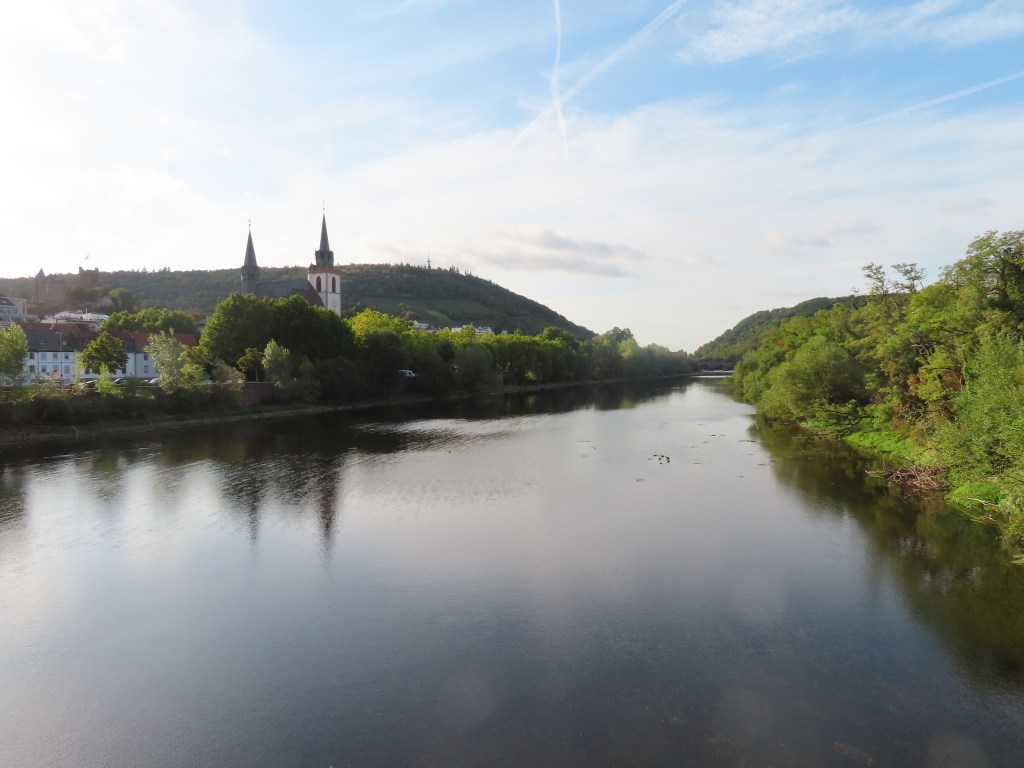
Bacharach is a small town of only about 1,500 people on the Rhine River.
Bacharach from the Train (video)
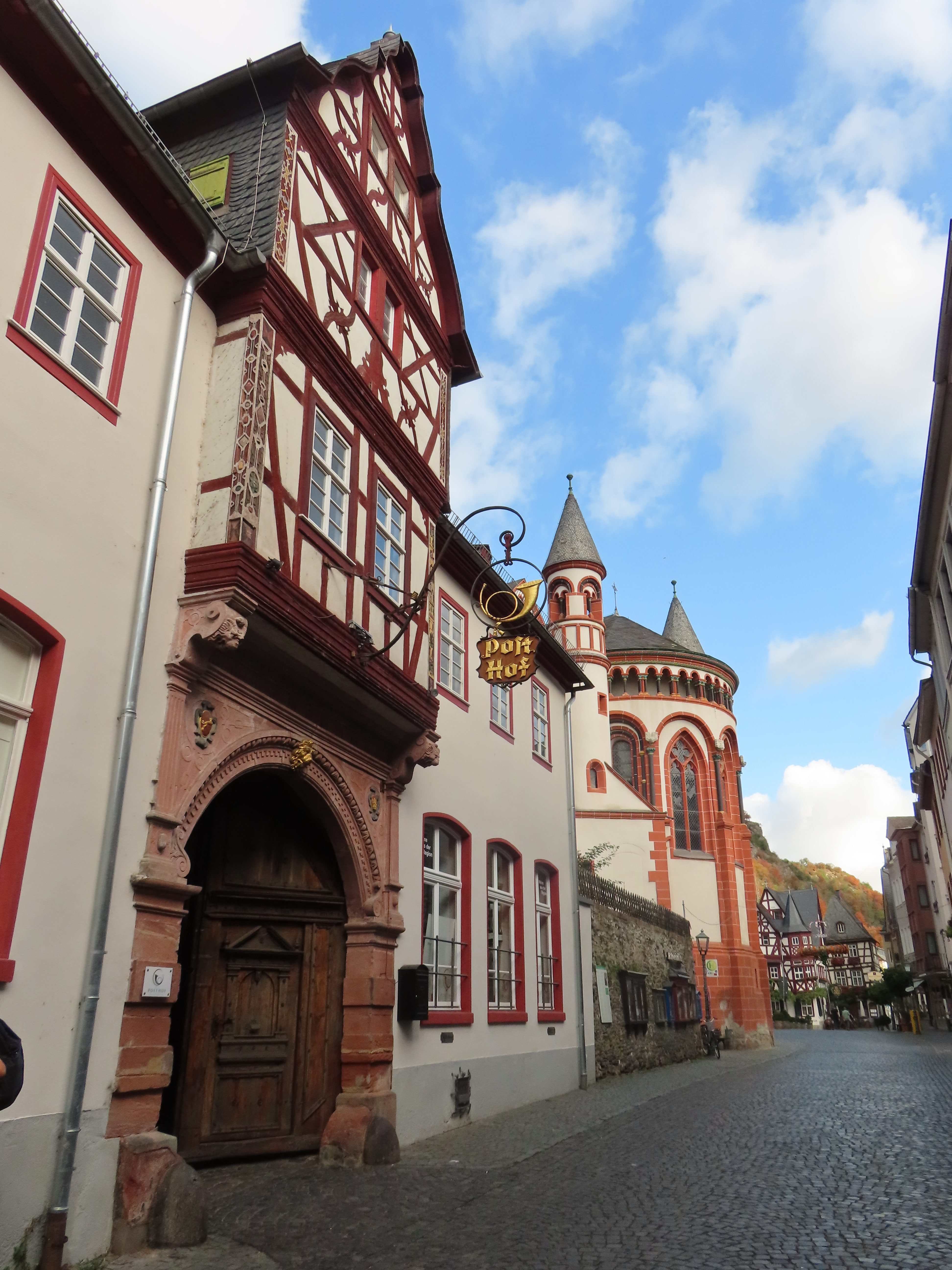
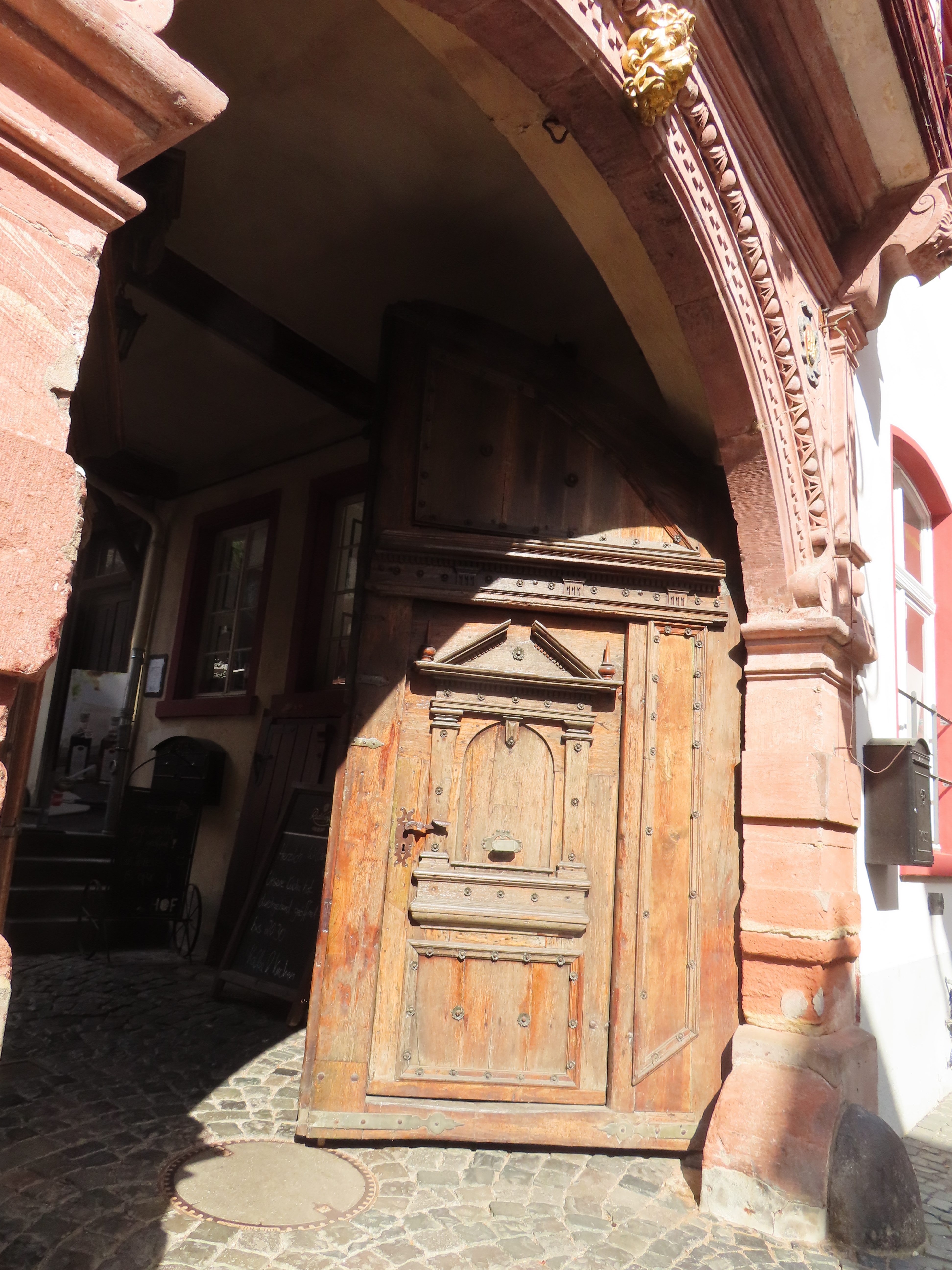
Many houses in Bacharach have large gates. Since medieval times, Bacharach was a center for collecting and trading wine in the Rhine Valley. Wine was made at home, and the large gates allowed people to bring in and take out large wooden barrels and harvested grapes.
By around the 18th century, Bacharach had also become an important stop for postal coaches. These were large horse-drawn coaches that carried both passengers and mail.
The coaches would pass through the gates into spacious courtyards, where goods and luggage could be loaded and unloaded, and tired horses could be replaced with fresh ones.
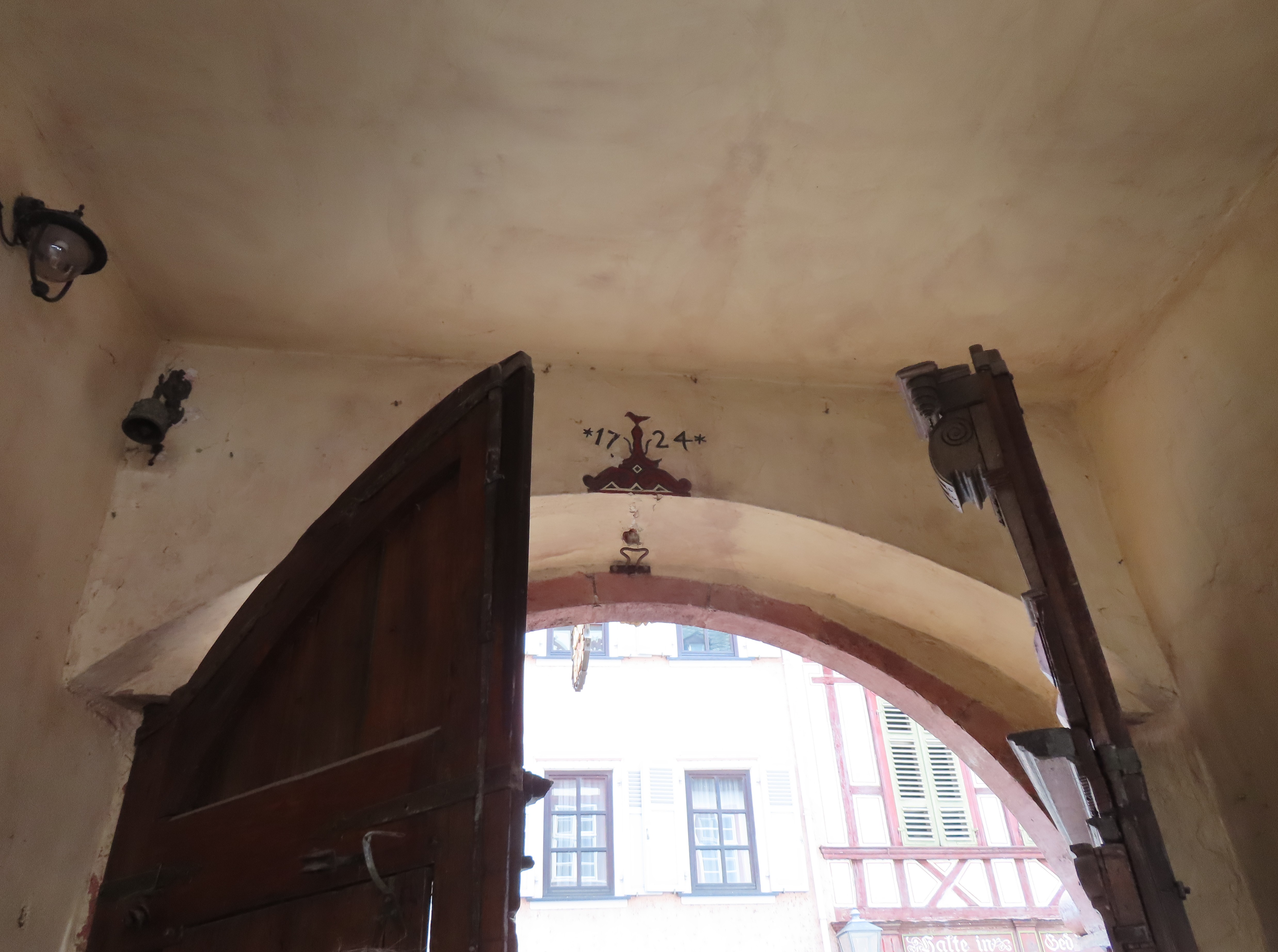
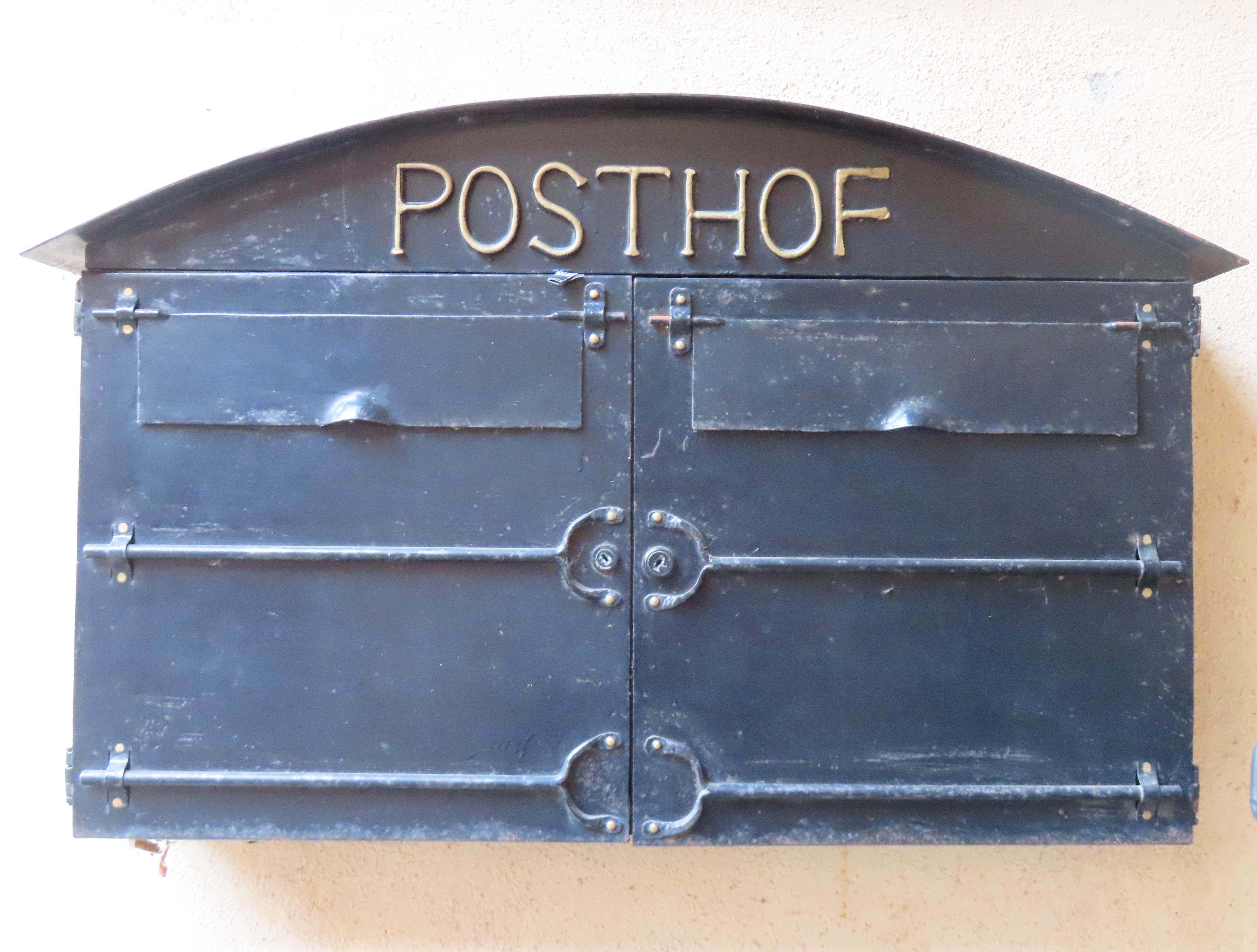
The Bacharach restaurant called the Posthof is housed in a building that had been used for postal services for 260 years, from 1724 to 1987.
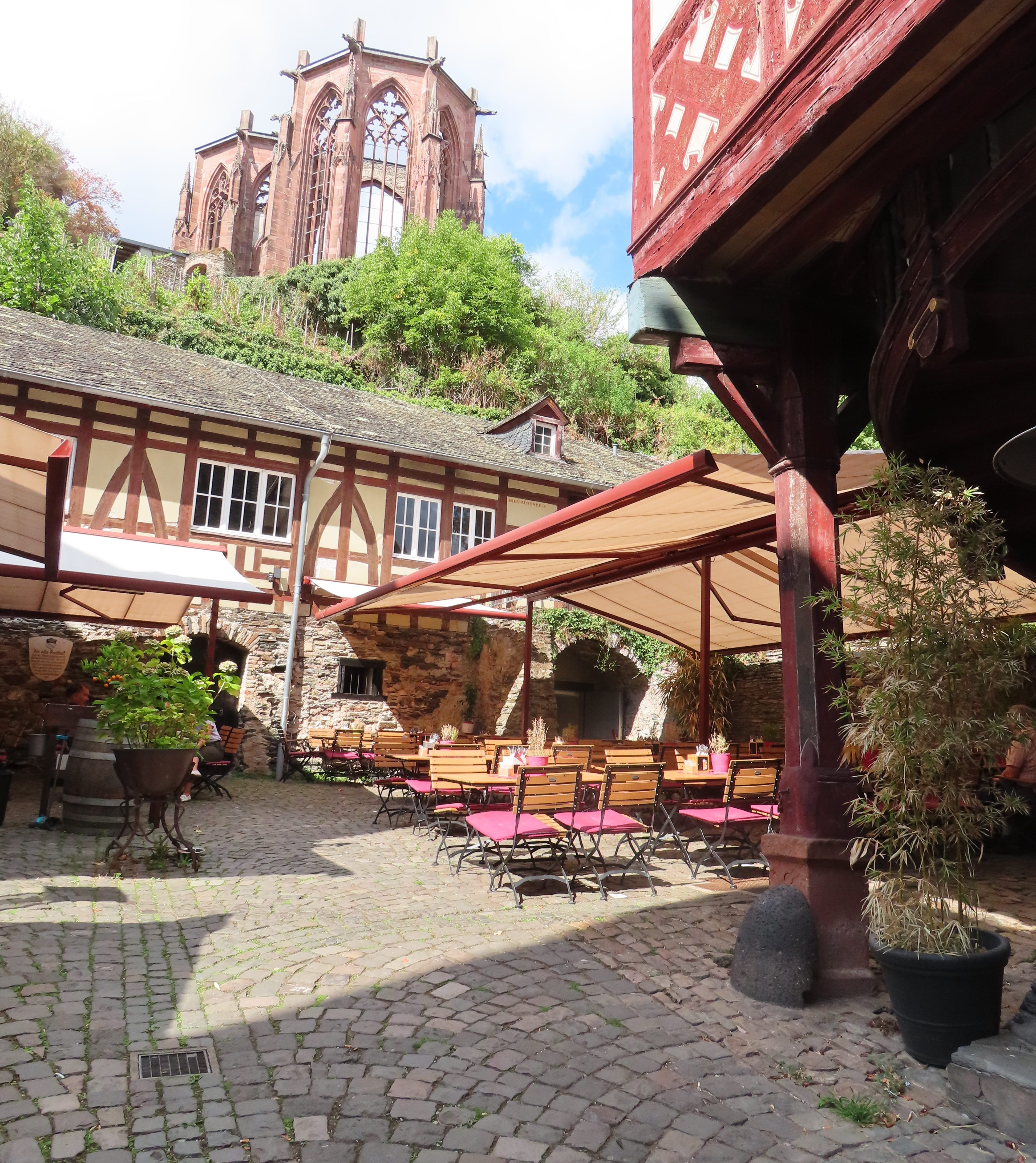
To enter the restaurant, we passed through a large gate and entered a courtyard where chairs were lined up. There was no one around. I wondered if the restaurant was closed when a small window opened.
“Are you closed?” I asked. “Not yet. We’ll be open soon,” a black man said. I said, “I will come back!” A passerby said that the place had been lively the night before, with music playing.
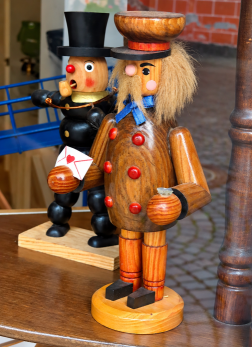
I walked around the town. Since it was Sunday, most of the shops were closed, and the streets were quiet. As I looked at the shop windows, I spotted a wooden figure of a postal carrier!
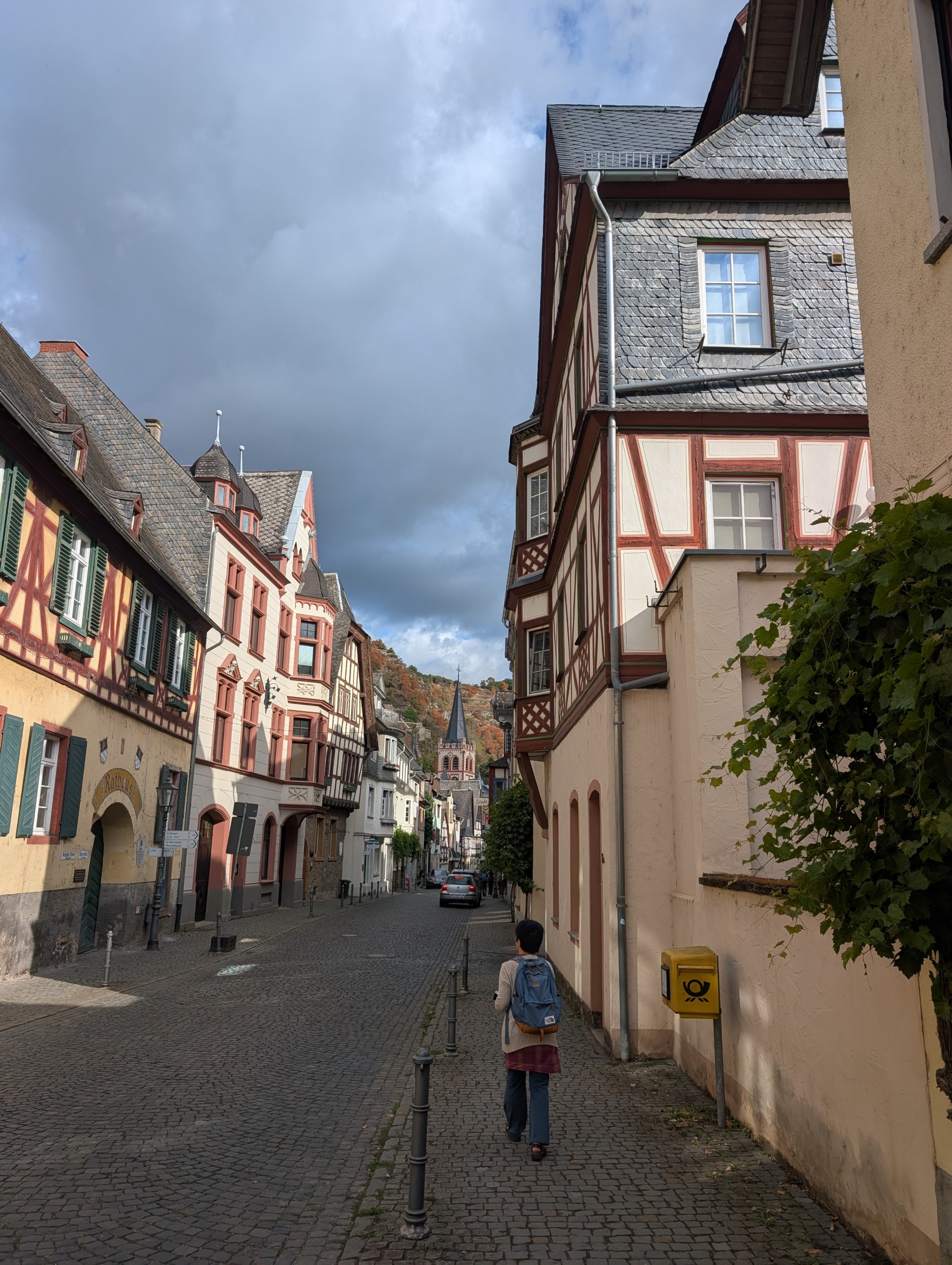
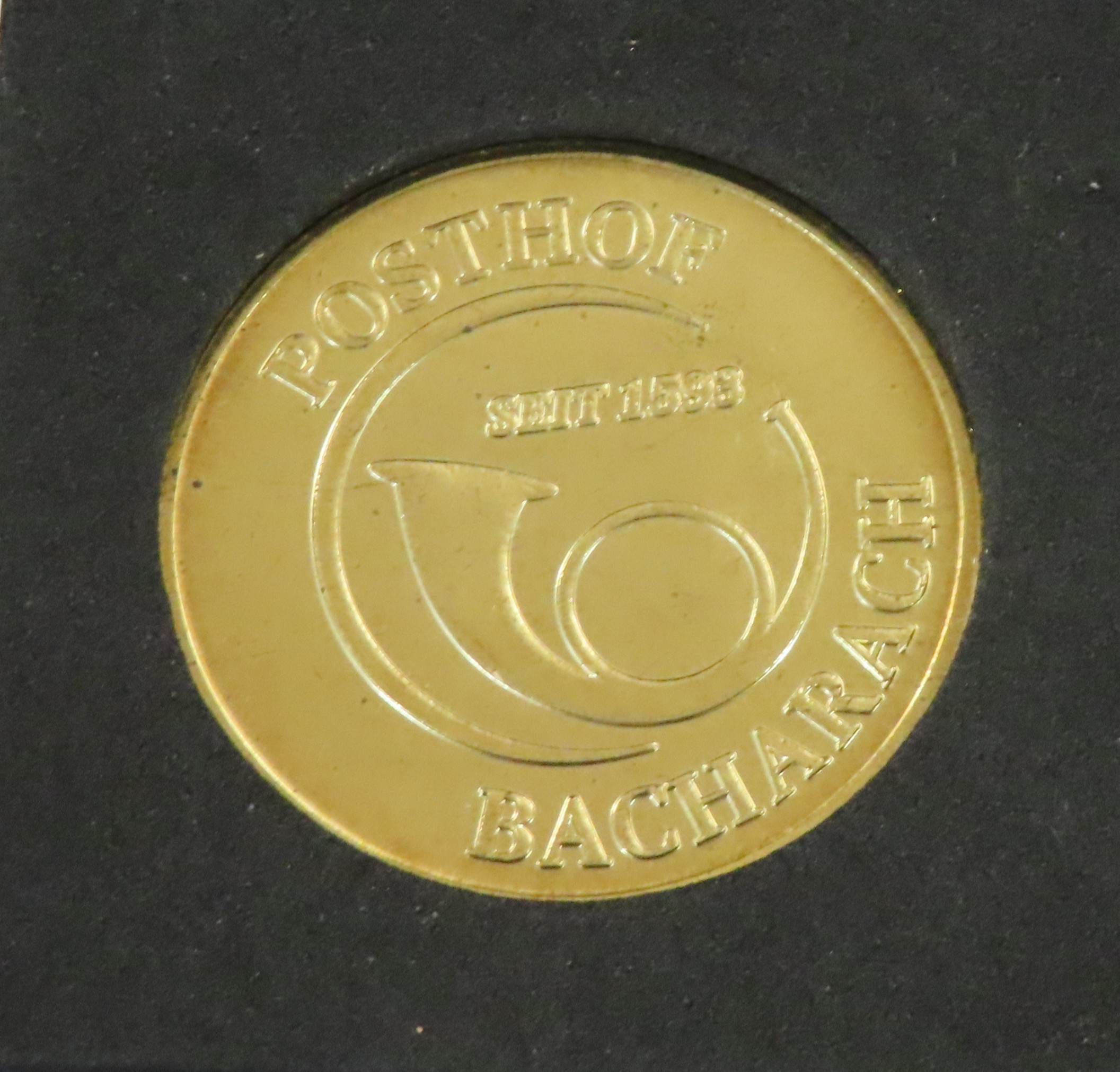
At the Posthof gate, Tim bought me a commemorative coin featuring a postal horn.
When we sat near the kitchen exit, I could hear the sound of a chopping board. We ordered a local Riesling and Apfelschorle, a beloved everyday apple soda-like drink in Germany.
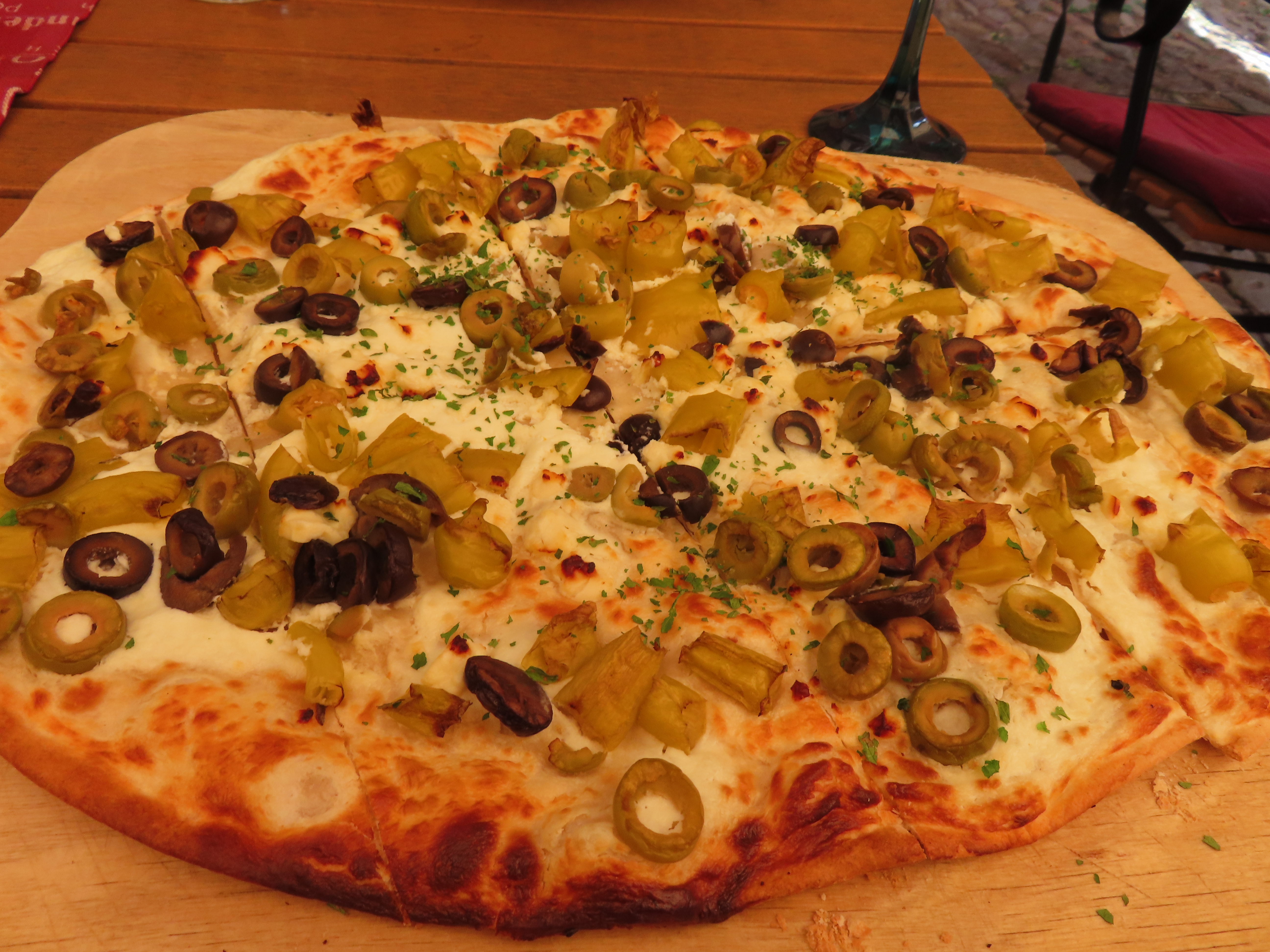
Flammkuchen is a traditional dish from Germany. It is like a very thin pizza, made with thinly rolled dough and topped with feta cheese, olives, and other ingredients. It was light and delicious.
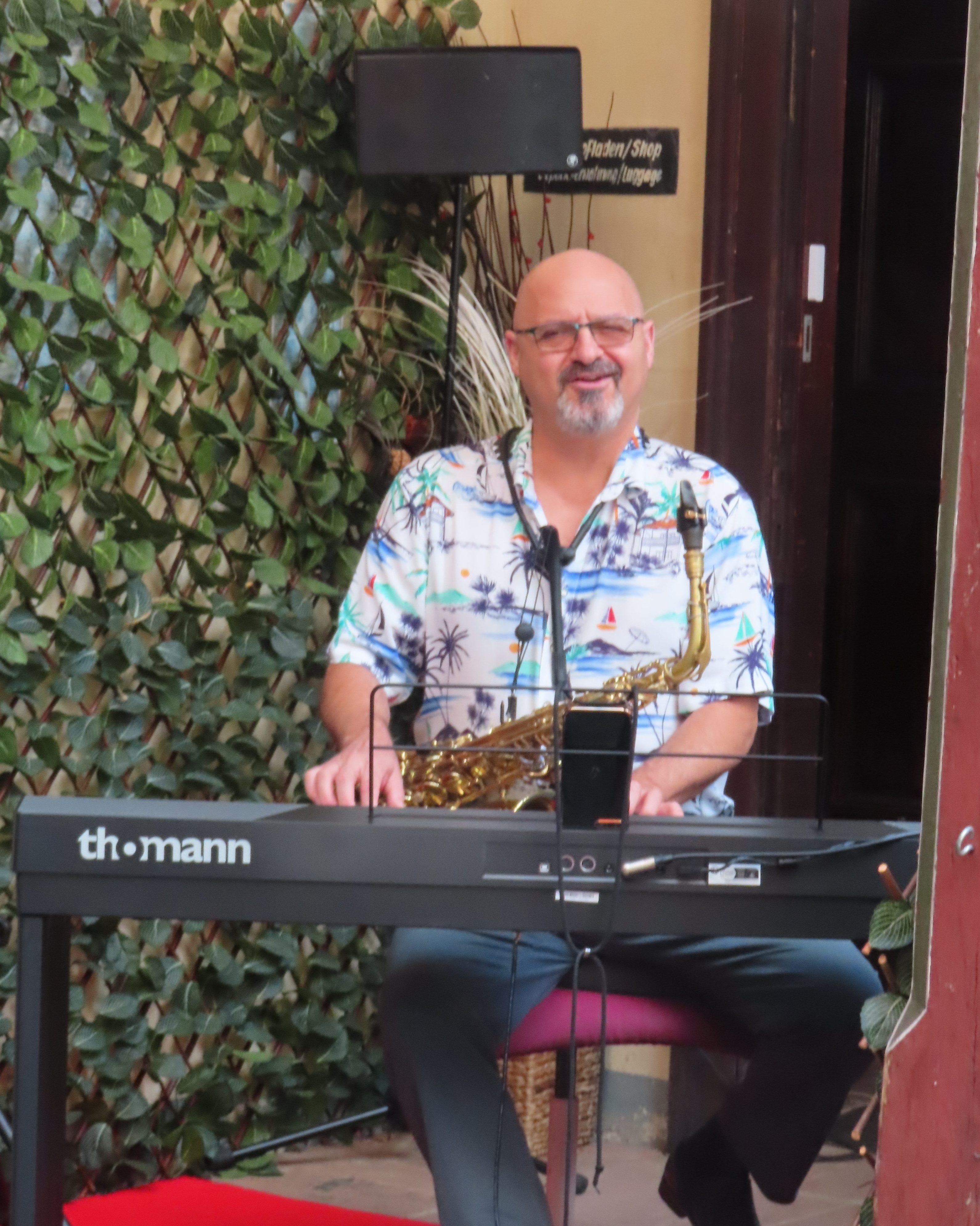
At the restaurant, a musician was alternately playing a keyboard and the saxophone. When I took some photos, he raised his saxophone high.
The bill came to €49. When I said, “Keep the change,” our heretofore tired-looking waiter suddenly broke into a smile to receive the extra €1. I held his hand and said, “You are busy. Please take care of yourself.”
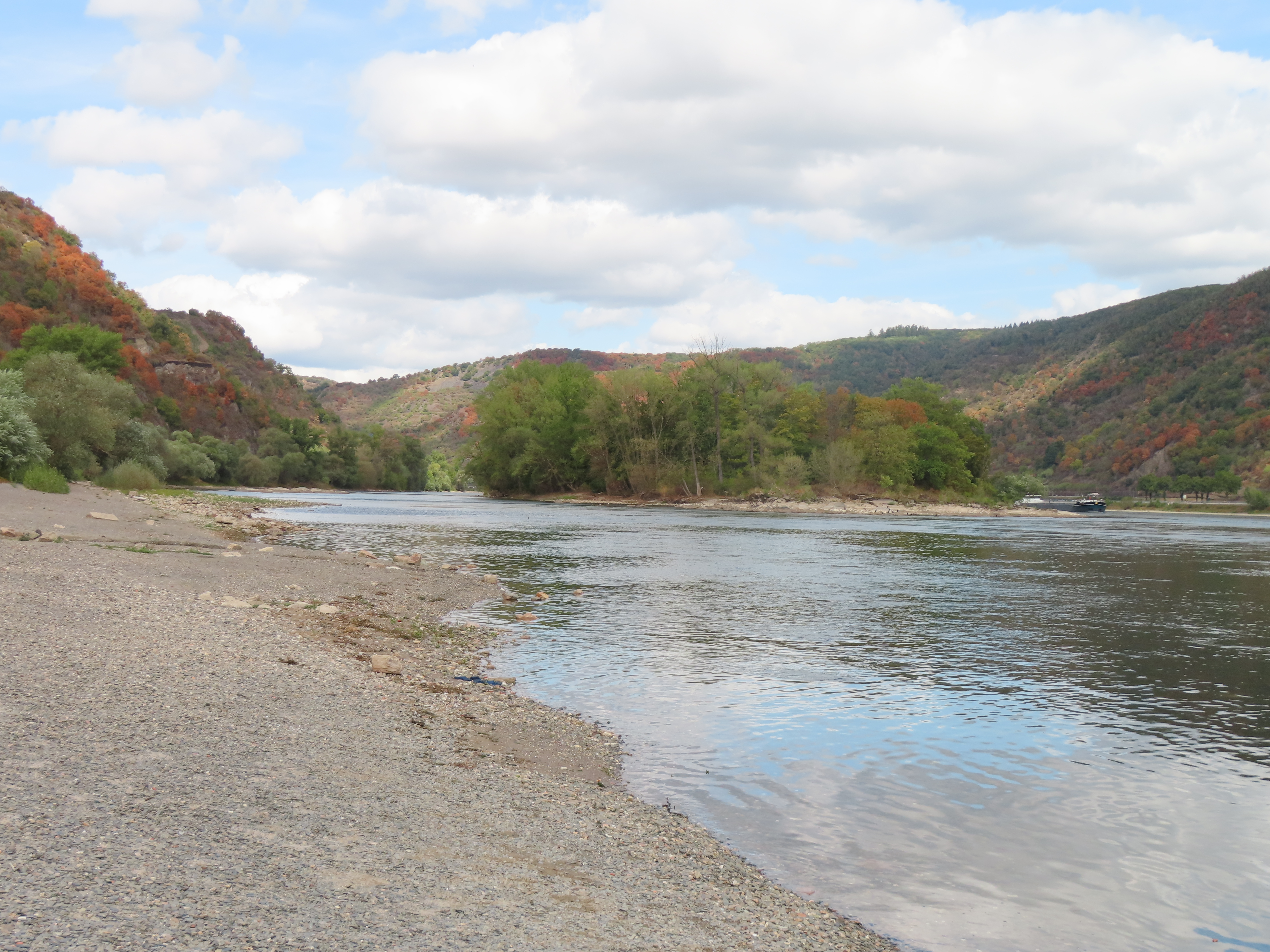
On our return trip, we took a cruise boat upstream from Bacharach to Bingen, through the Upper Middle Rhine Valley, a UNESCO World Heritage Site. This summer, the Rhine River had fallen to record-low water levels.
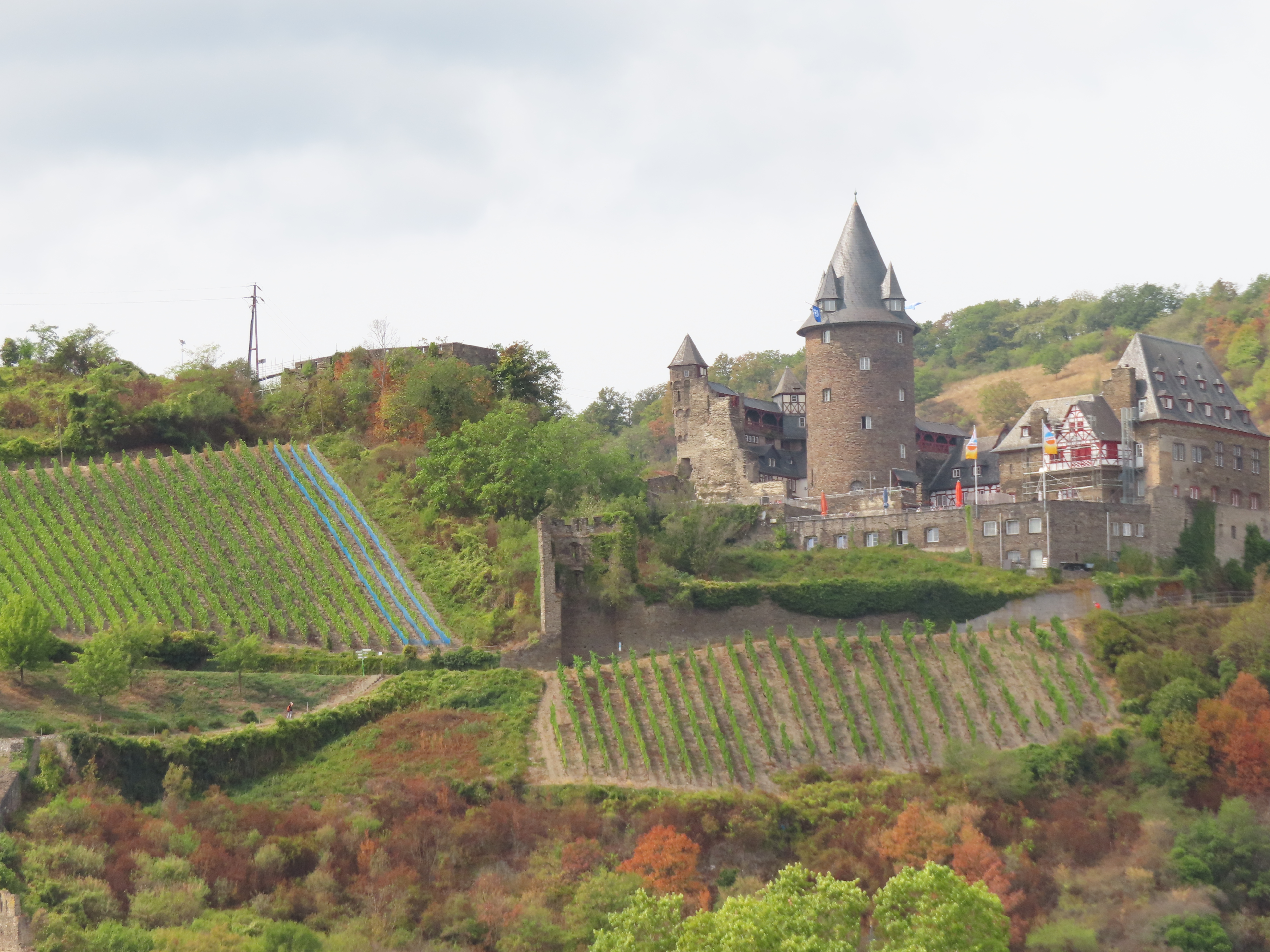
The deck was lively, with people enjoying wine and beer. The hillsides were covered with vineyards, and we passed as many as five castles.
After seeing so many castles, I started thinking about all the people who had carried the stones up the steep hillsides to build them. Just thinking about it made me tired!
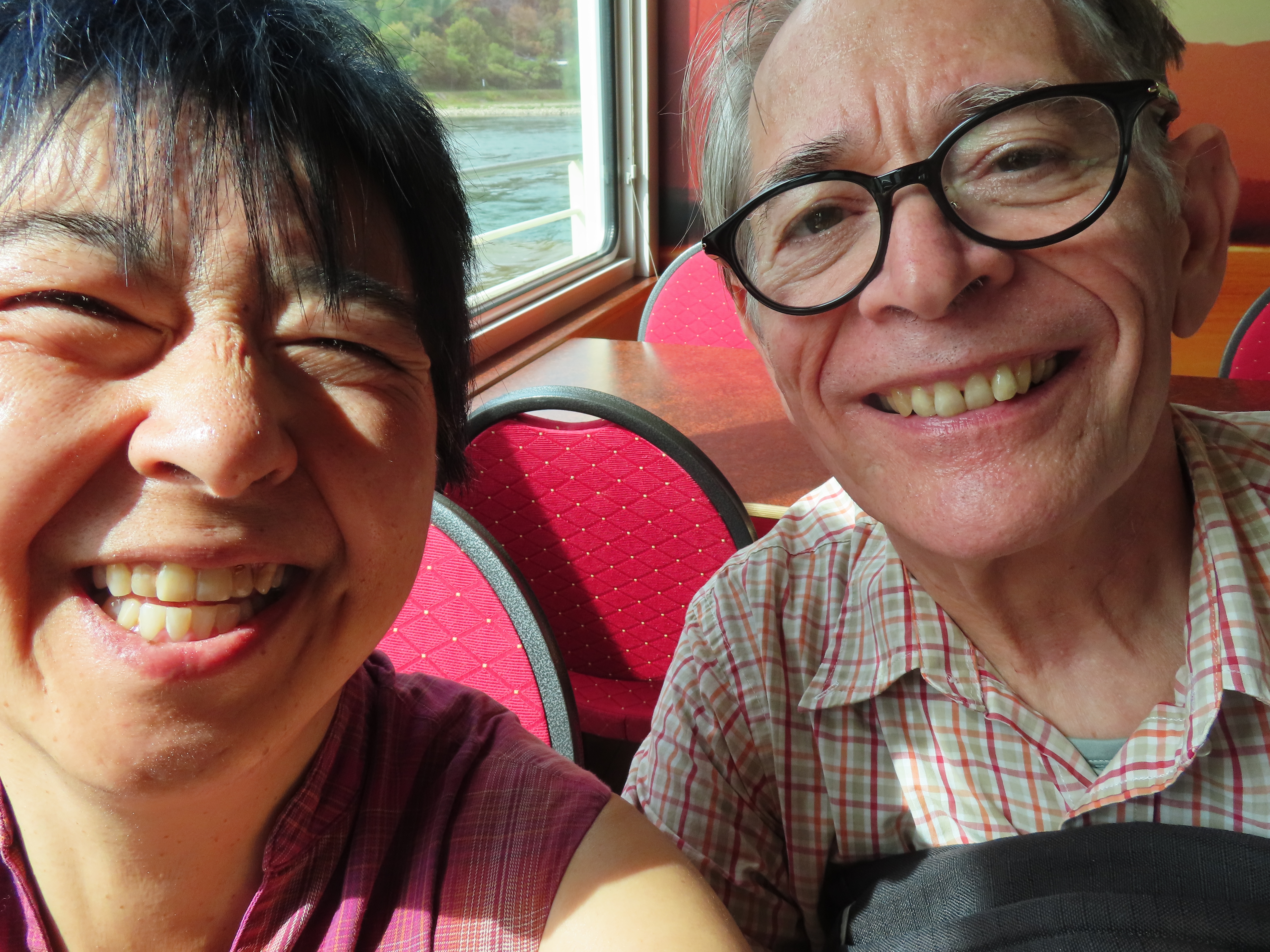
We went down to the lower deck, where there was no one, and relaxed for a while.
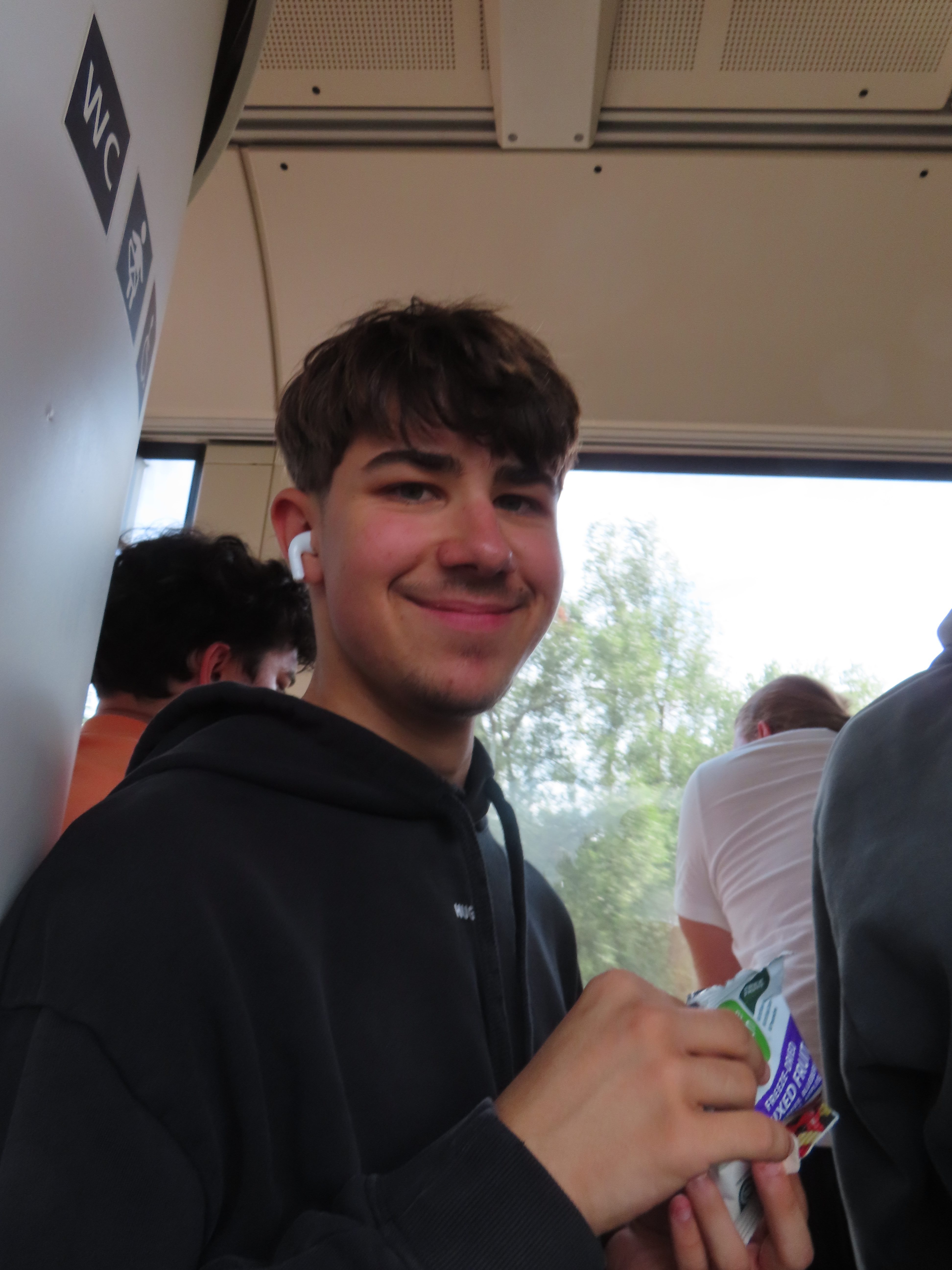
When we got off the boat at Bingen Station, our train was delayed by an hour. It was crowded, and we also had to change trains. While I was fumbling with the restroom door on the train, trying to figure out how to open it, a young man named Paul pressed the button for me and laughed. When I gave him a snack, he smiled.
It was a long day, but I had a wonderful time.