While changing trains on the way to Nuremberg, a woman helped me carry my suitcase up the stairs to the platform.
I heard that Germany’s railway infrastructure has suffered from years of underinvestment and aging infrastructure, while crowded schedules have led to frequent delays and cancellations. Departure times and platforms seem to change all the time.
Our train to Nuremberg was canceled, so we went back to Frankfurt and changed trains there. We had no time at all to make the connection, but fortunately the train we wanted to take was delayed. We ran along the platform and just made it onto the train.
Tim planned all our train connections.
On the train, I wrote some letters. Then a Black woman came by carrying a tray with cups, saying, “Cappuccino? Cappuccino?”
“Yes, please!” I said.
It was delicious. The journey took six hours that day, but thanks to the cappuccino, I made it through.
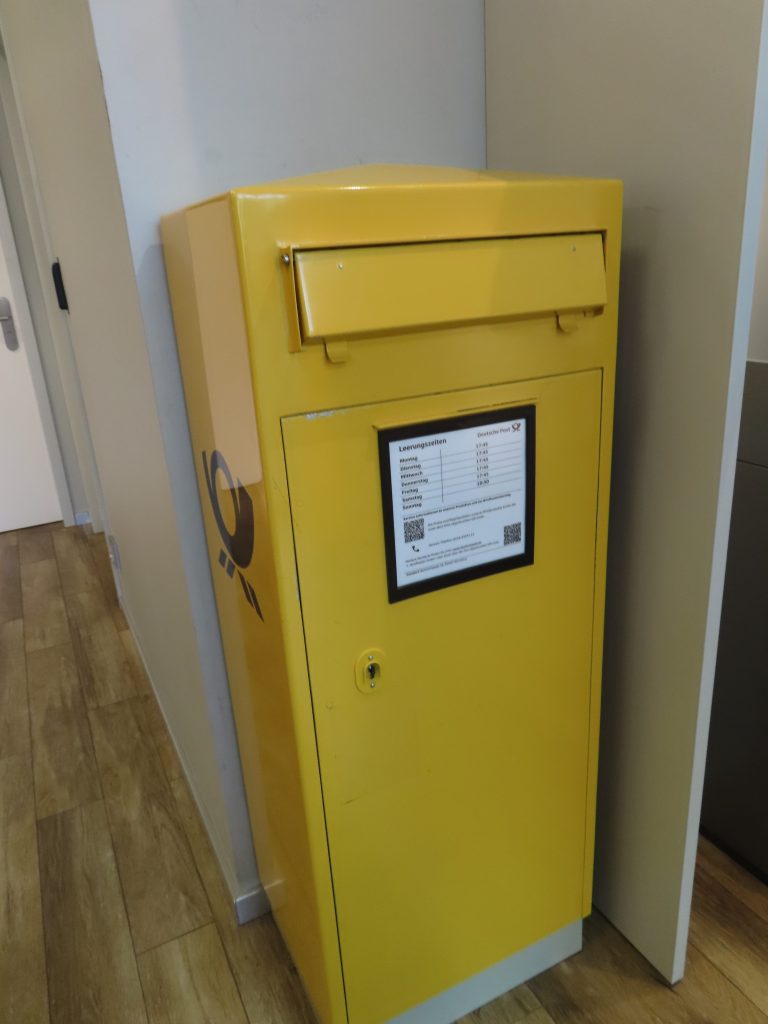
Near the Nuremberg station, I found a post office. I dropped a postcard into the mailbox.
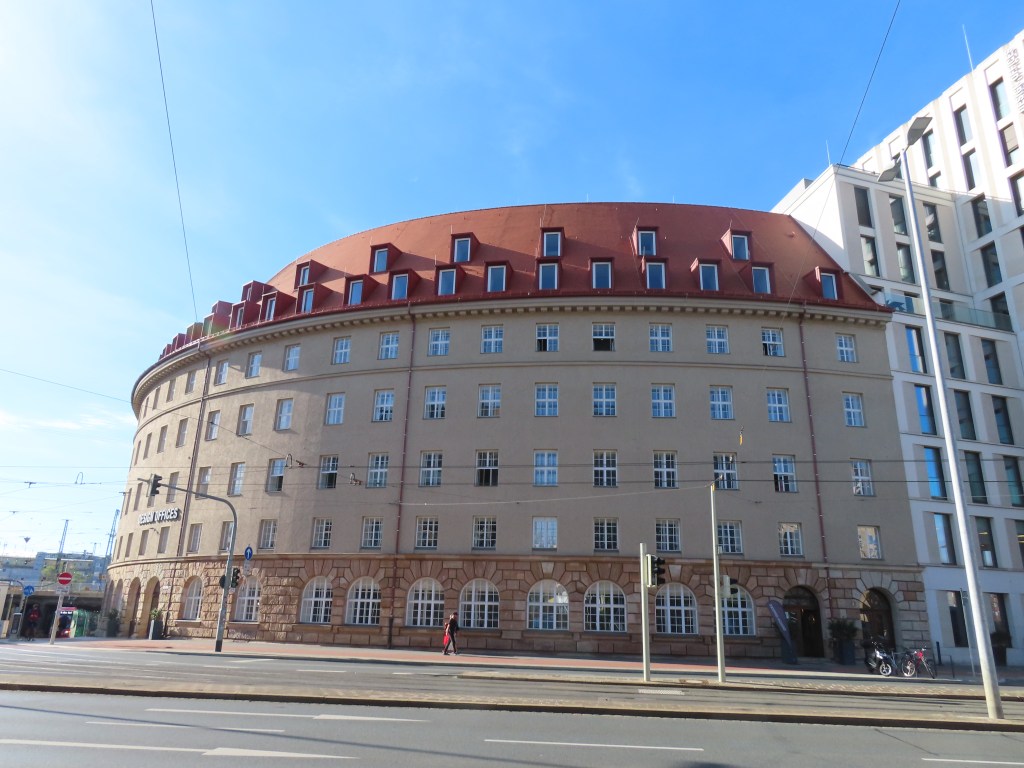
There was a former central post office near Nuremberg Station. It is now used as office space.
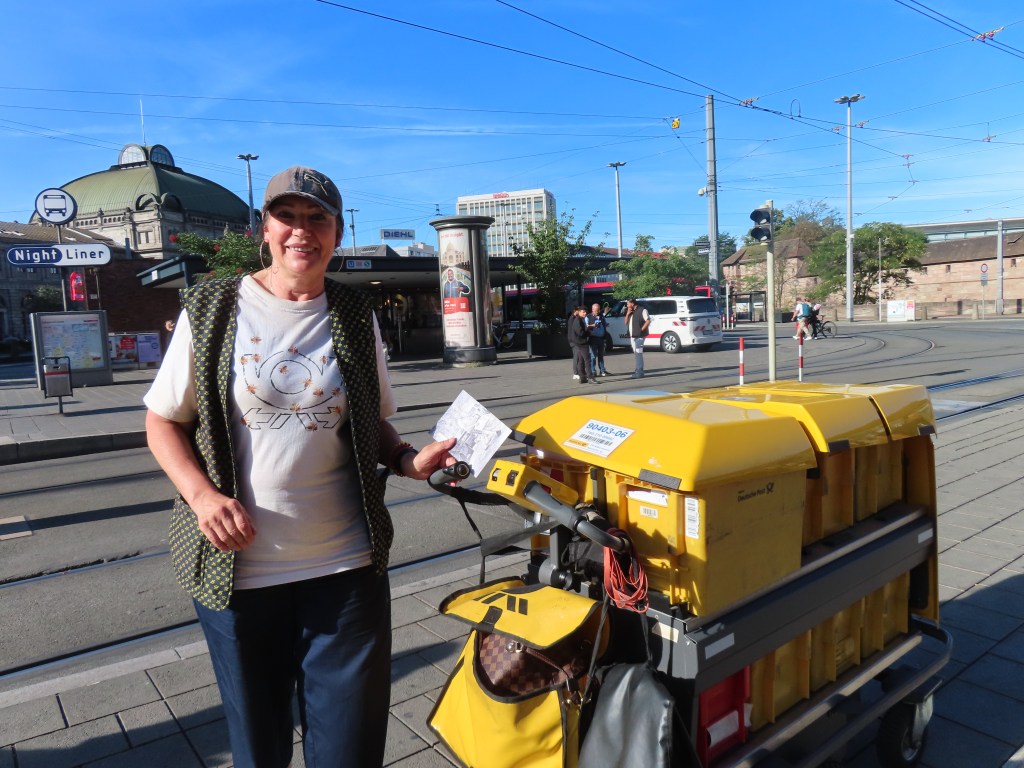
I was on my way to take the subway when I spotted someone pushing a yellow cart. It had to be a postal carrier, I thought, so I ran after her.
“Hello! Are you a postal carrier?” I asked.
The woman opened the yellow container and showed me the mail inside. She was a postal carrier!
I handed her a postcard. “The post office is over there,” she said.
But then she glanced at the postcard and suddenly broke into a smile, as if to say, “For me?!”
Her name was Maria.
“Danke schön!” she said.
We hugged right there in the middle of the street.
Tim and I had breakfast at the café in the Museum of Communication in Nuremberg. There were many different kinds of pastries, and the coffee was delicious.
The museum had a different kind of charm from the one in Frankfurt. About 19,000 postal bicycles are still used in large cities today. Mail trucks provide shelter from the wind and rain. Large motorcycles were formerly used to collect mail from postboxes and for express deliveries. I learned that they were not suitable for short distances.
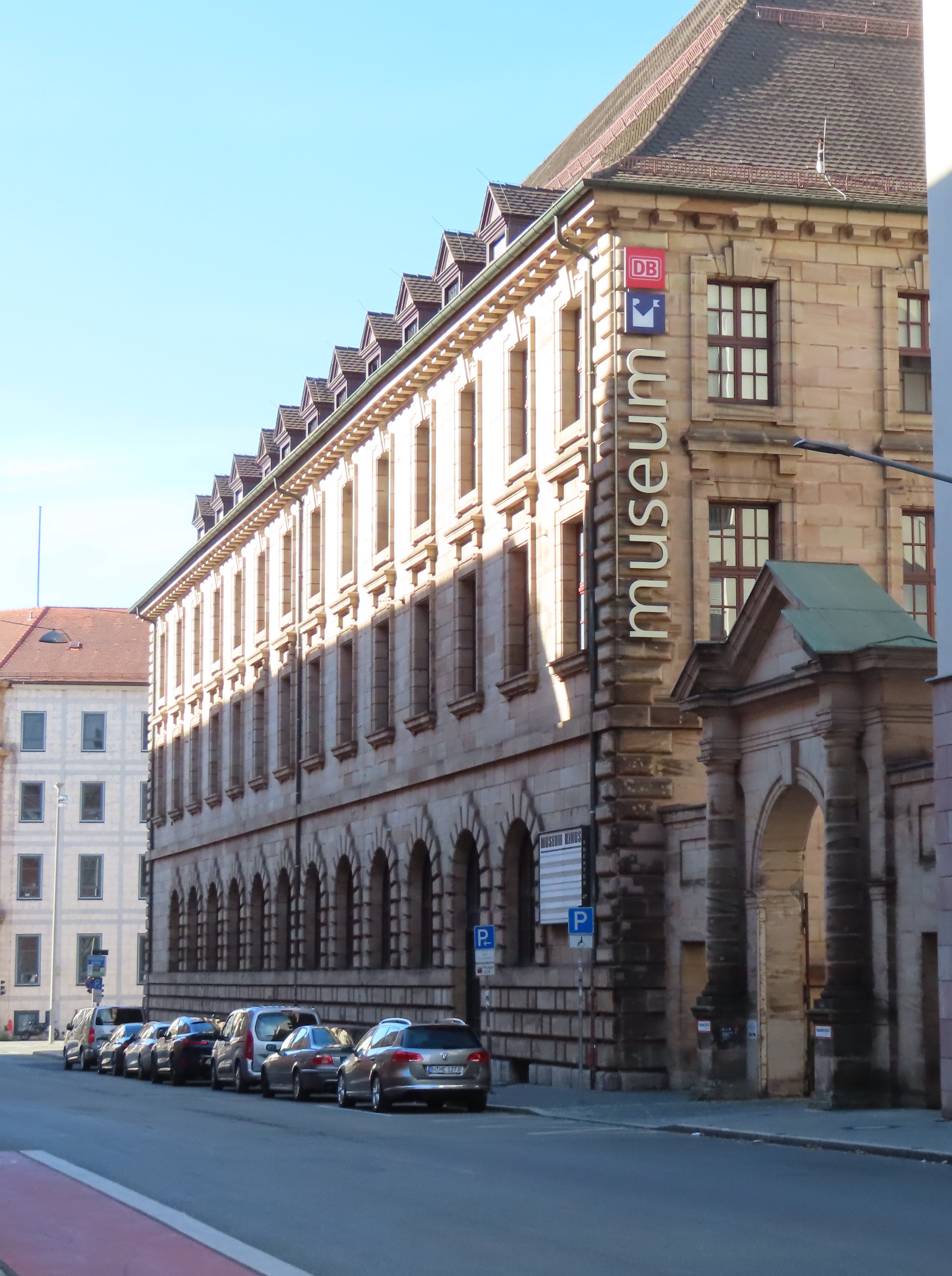
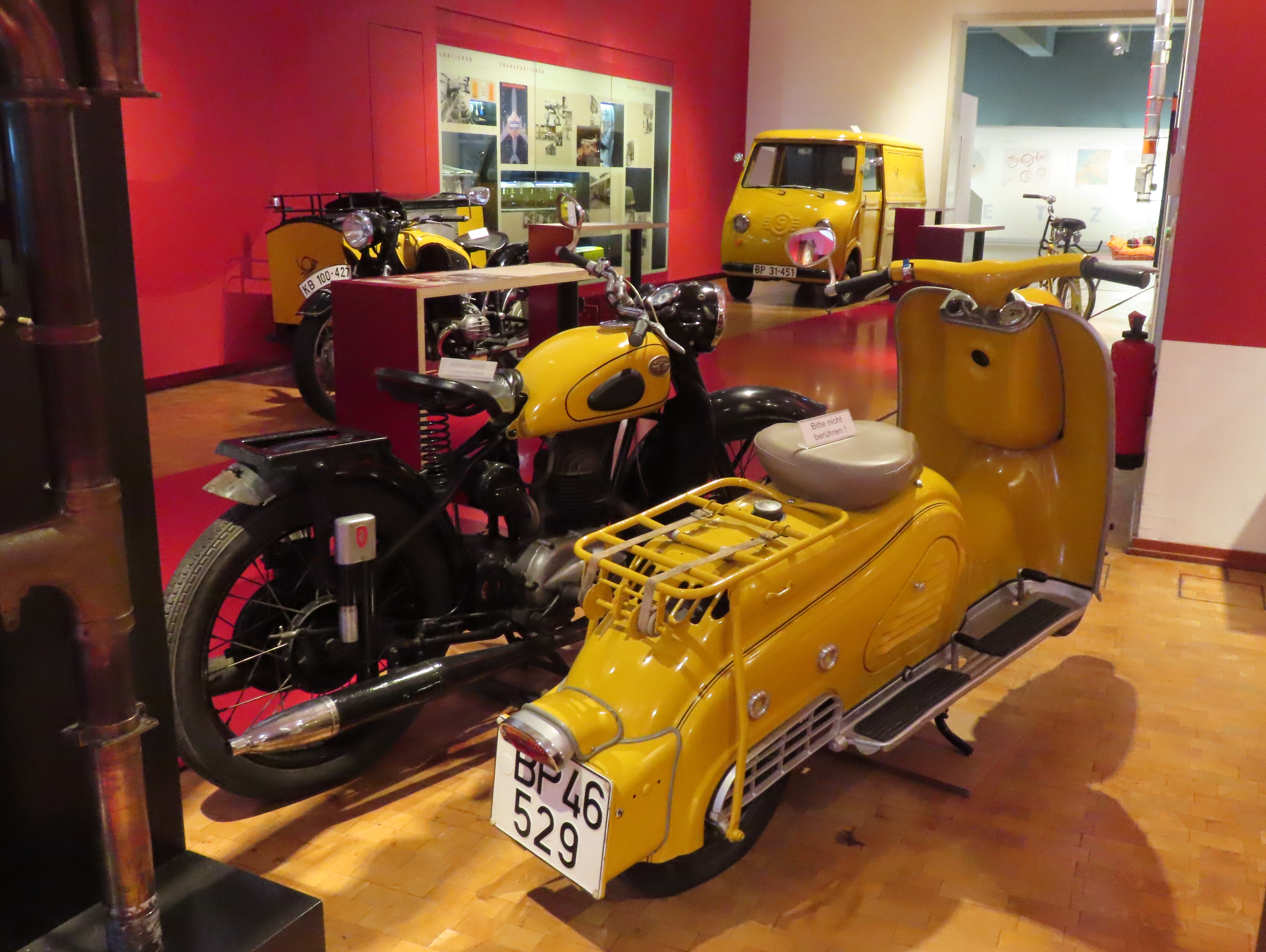
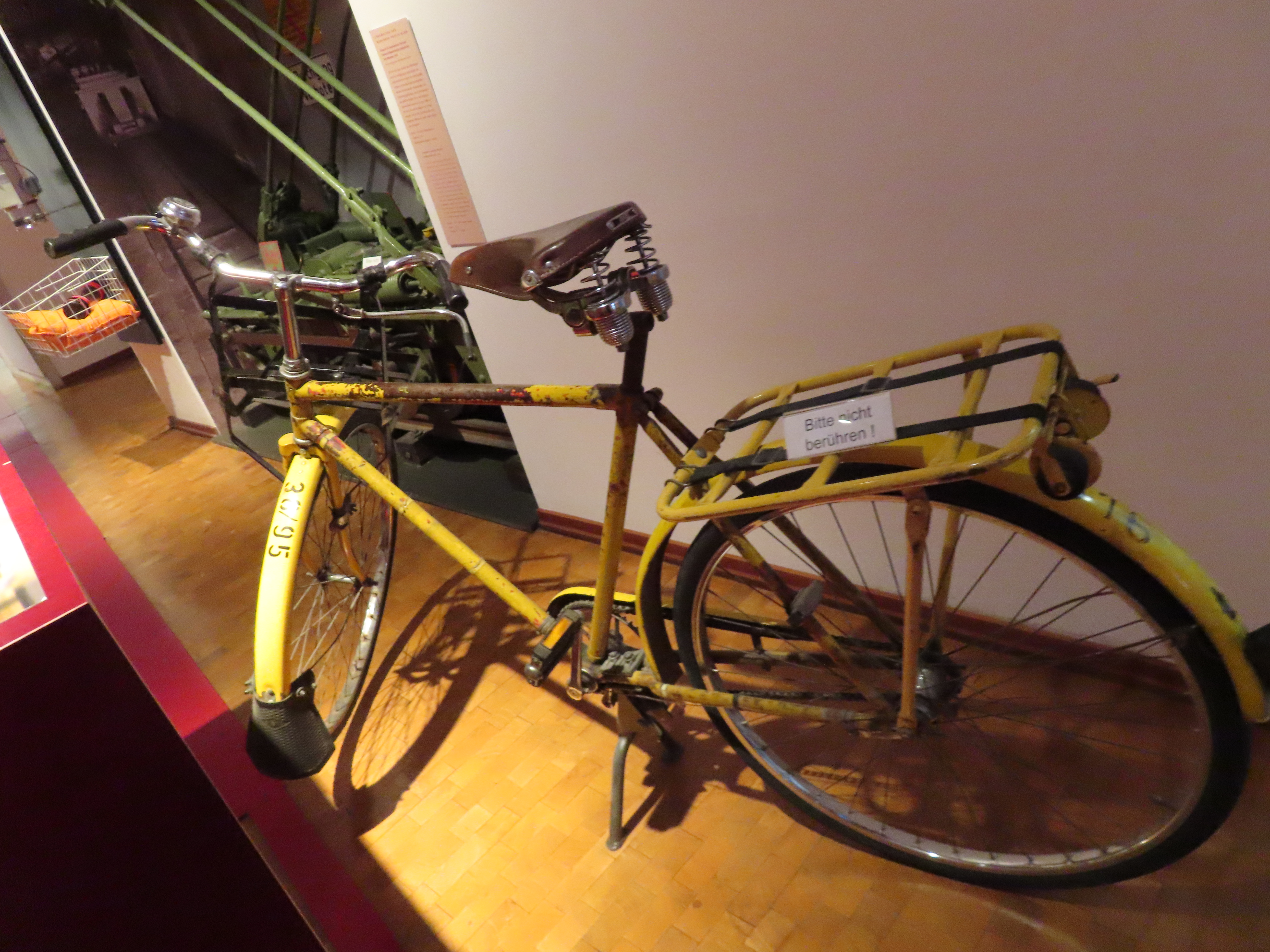
I put my notepad and phone on the table and recorded a video of the film that was playing at the museum.
The Post at Work (excerpt from a video of postal operations)
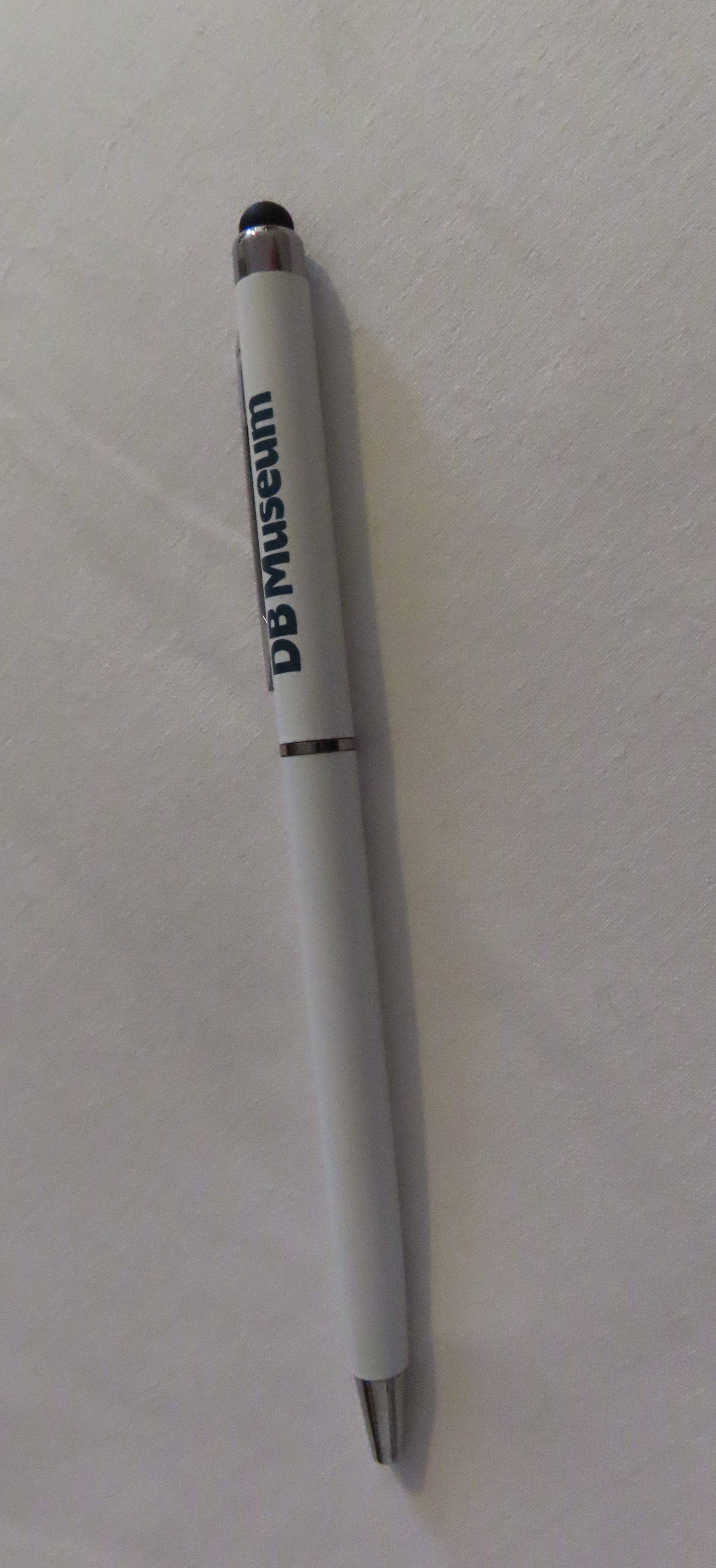
Later, as I was browsing in the gift shop, a museum staff member said, “Is this yours?”
It was the notebook and phone I had left on the table when I recorded the video. My phone was still tucked inside the notebook. I hadn’t even realized I had lost them. I wondered who had turned them in.
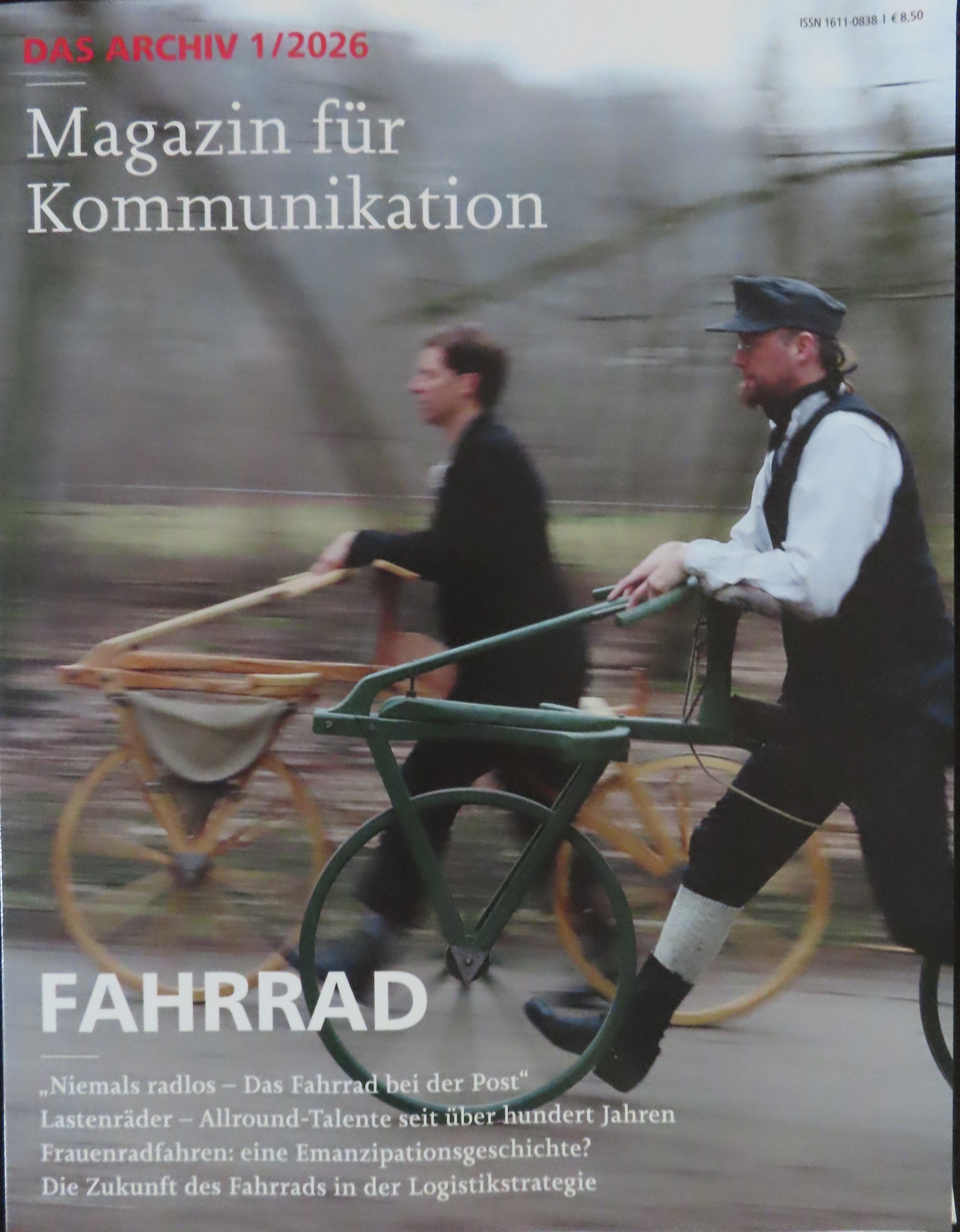
I said, “Danke schön,” and bought a magazine about postal deliveries. “It’s in German. Is that okay?” the clerk asked. She even gave me a museum pen.
“I painted this,” I said, handing her one of my postcards. She looked at it for a moment. When she realized it was a painting of a postal delivery, her face lit up with a look of recognition and delight.
Her name was Virgilia. I held her hand.
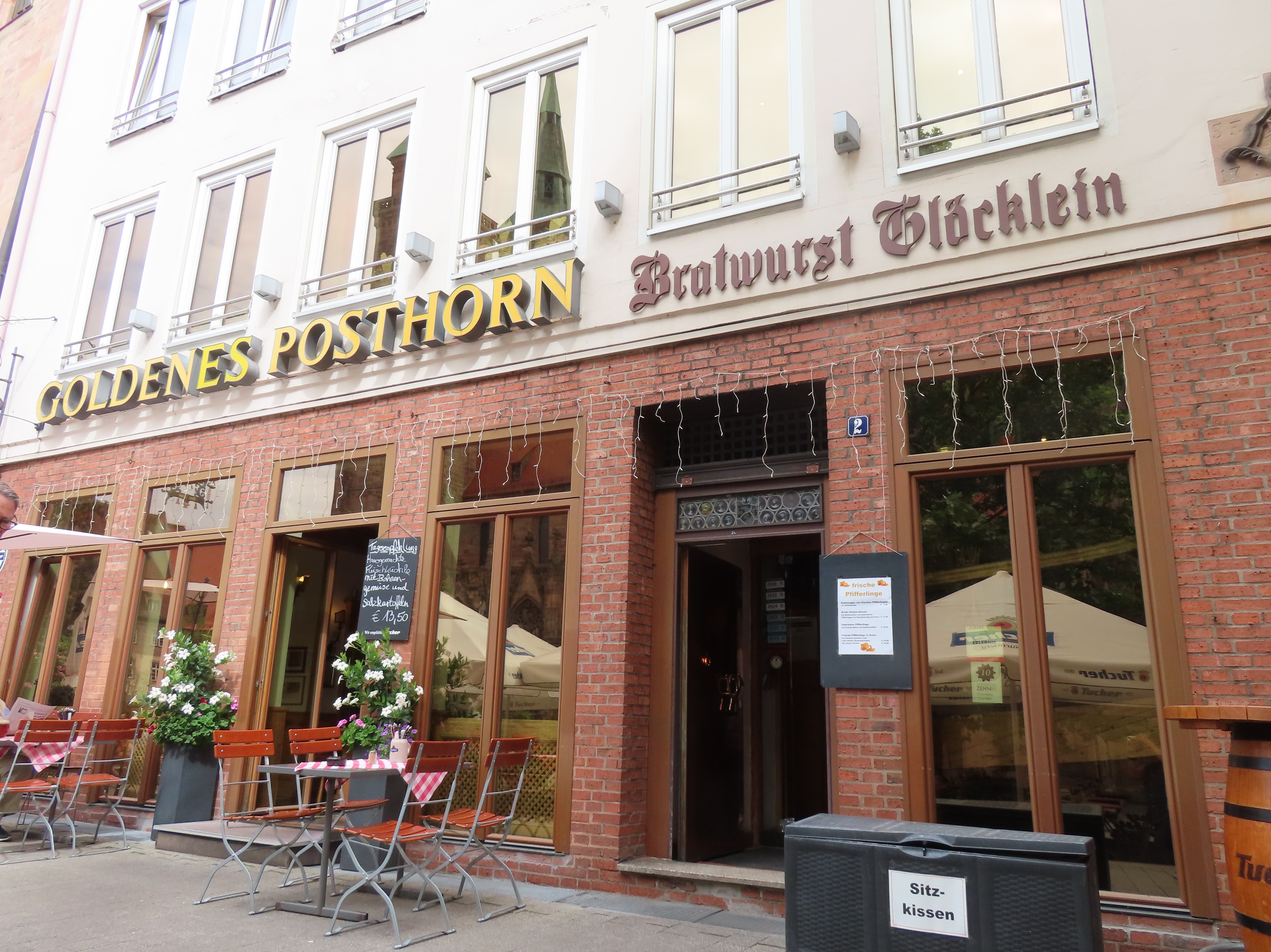
Tim said, “There’s a restaurant in Nuremberg called the Golden Post Horn.”
“I want to go!” I said.
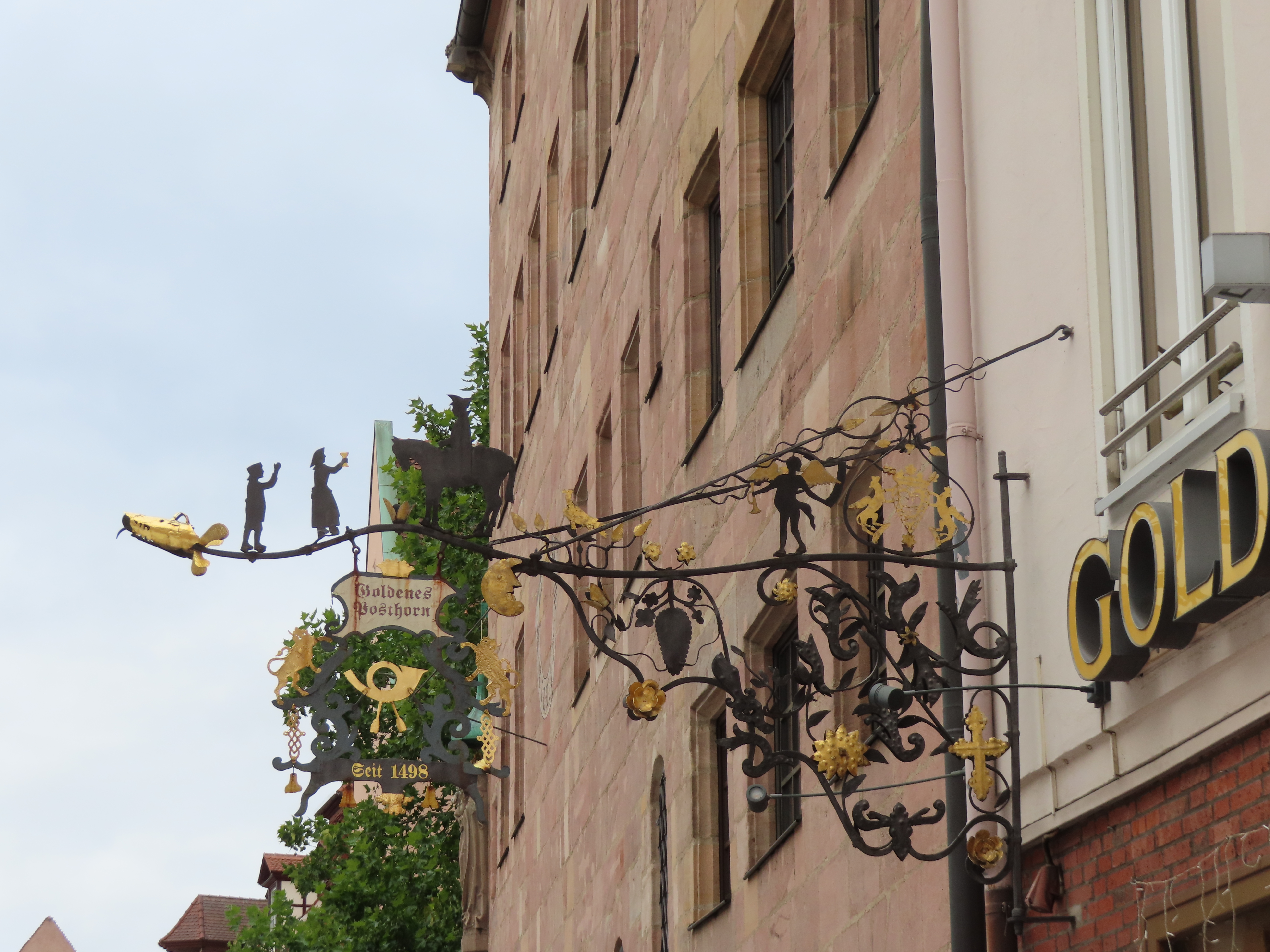
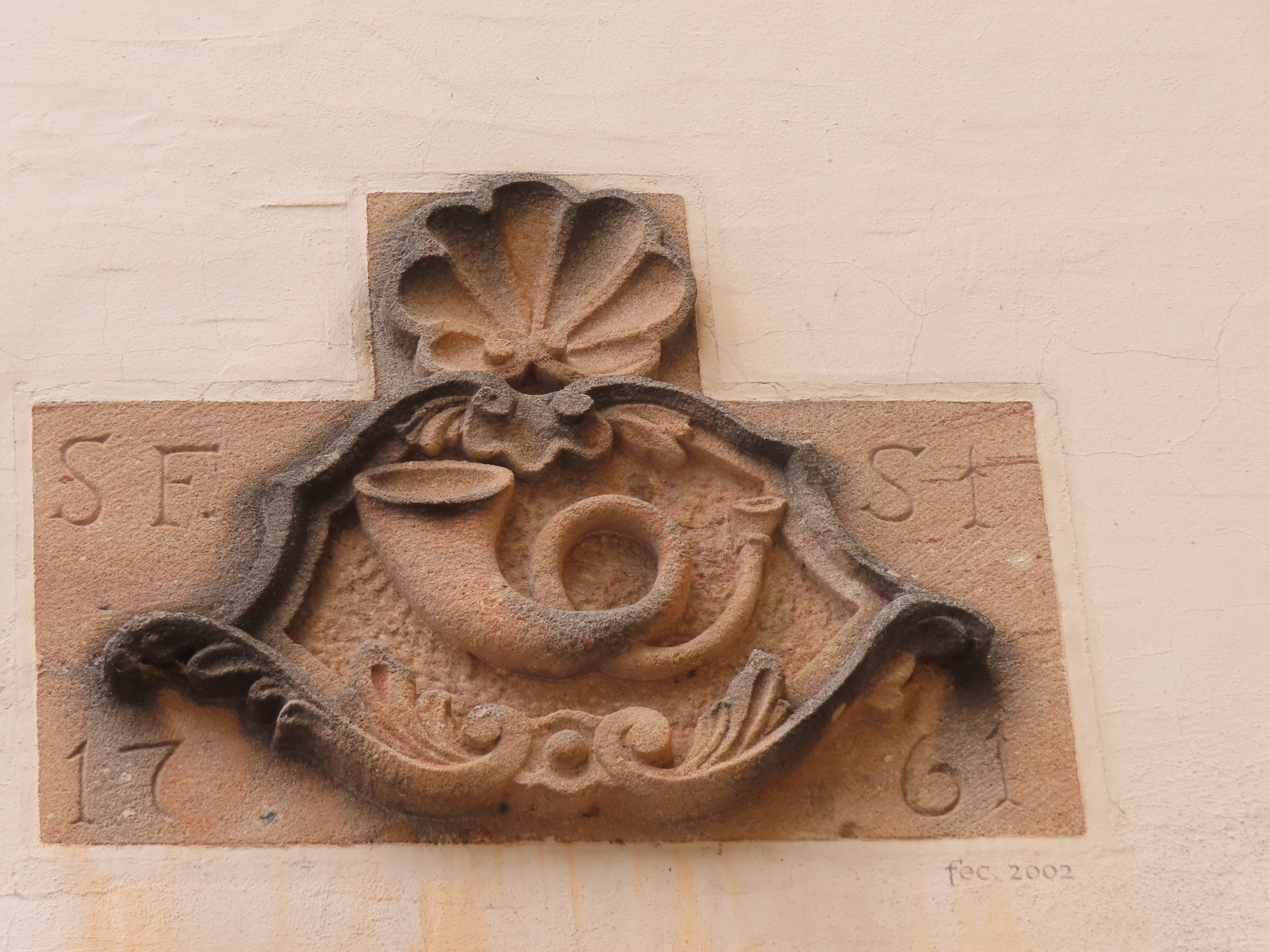
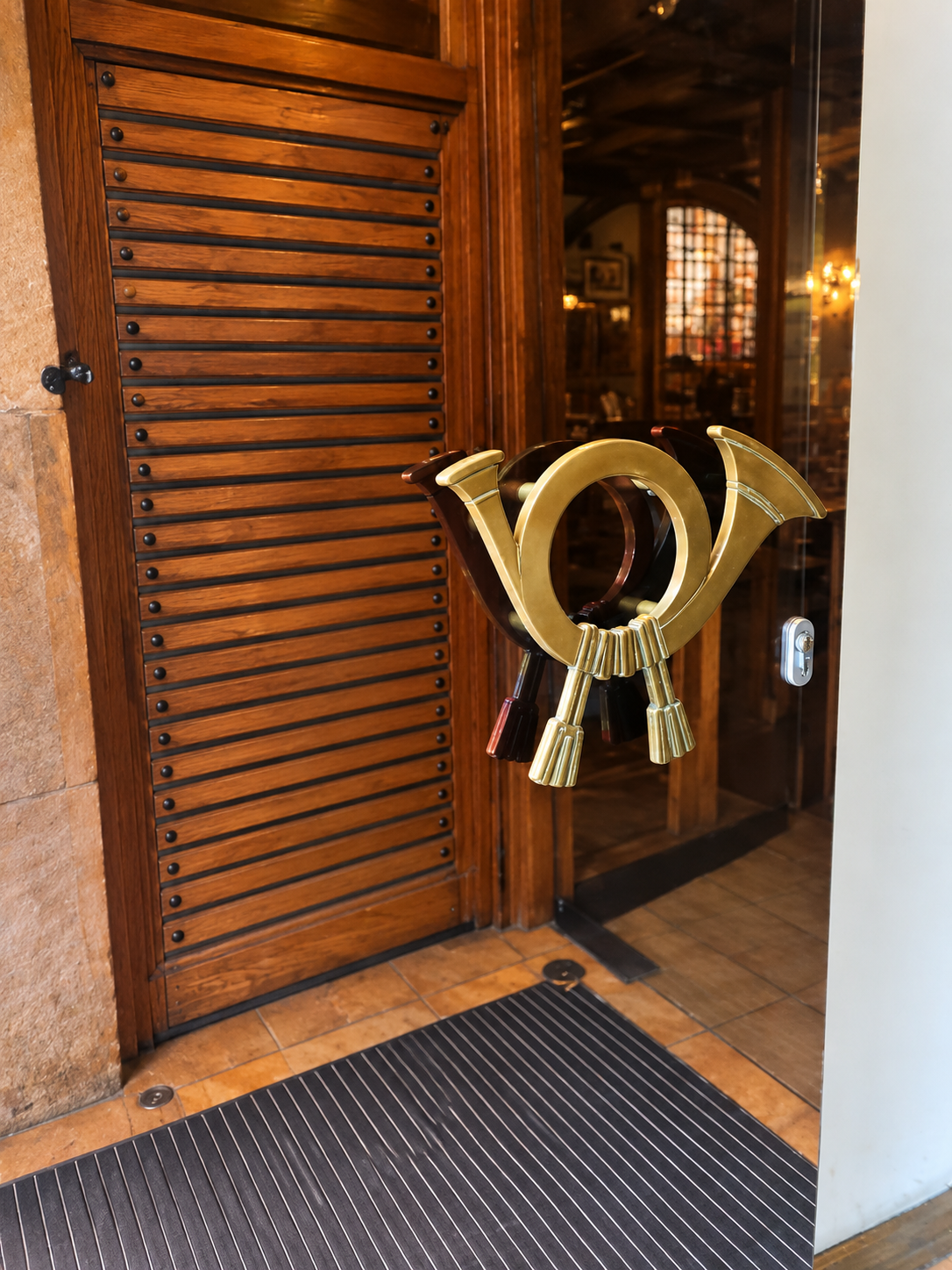
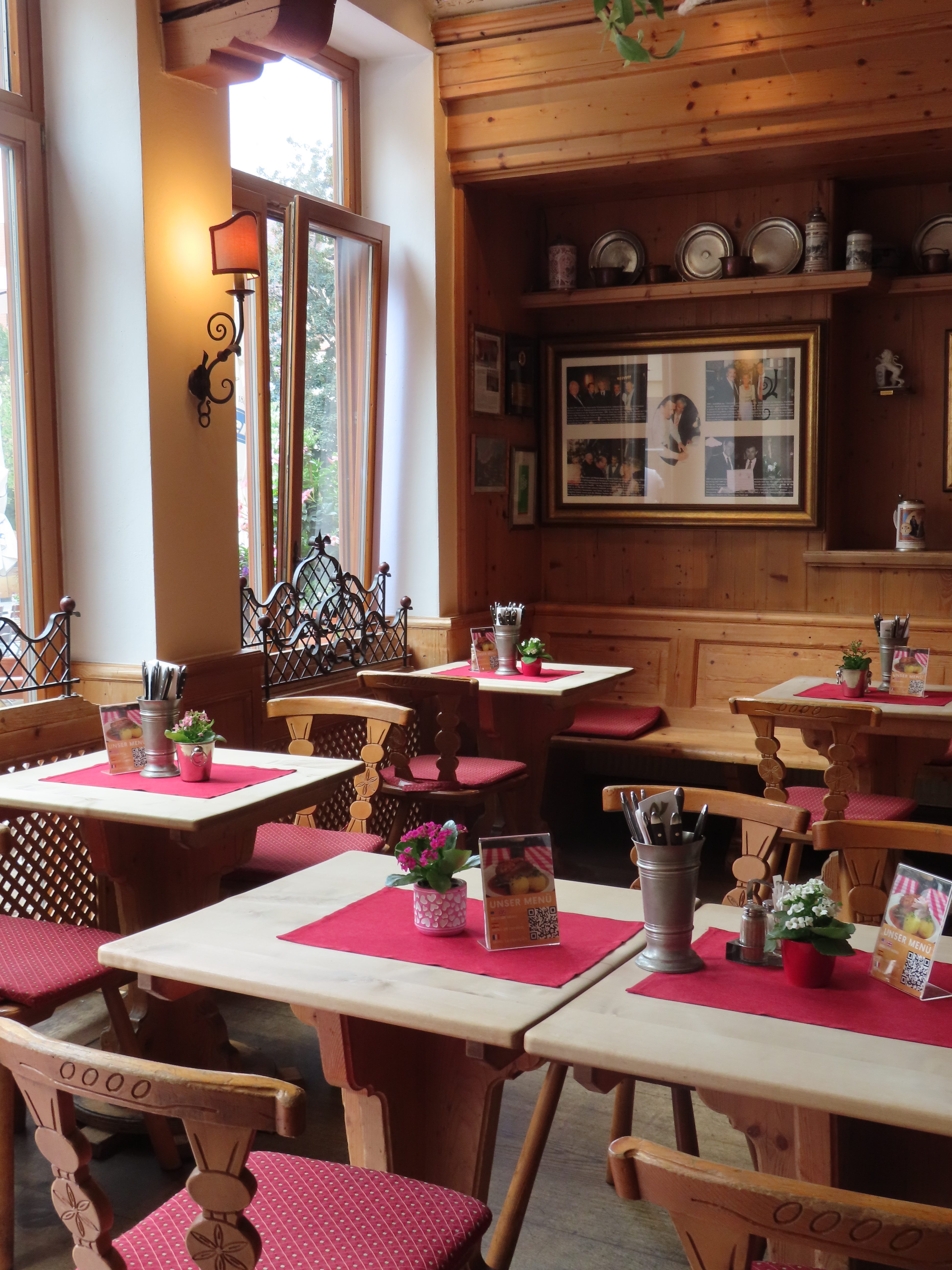
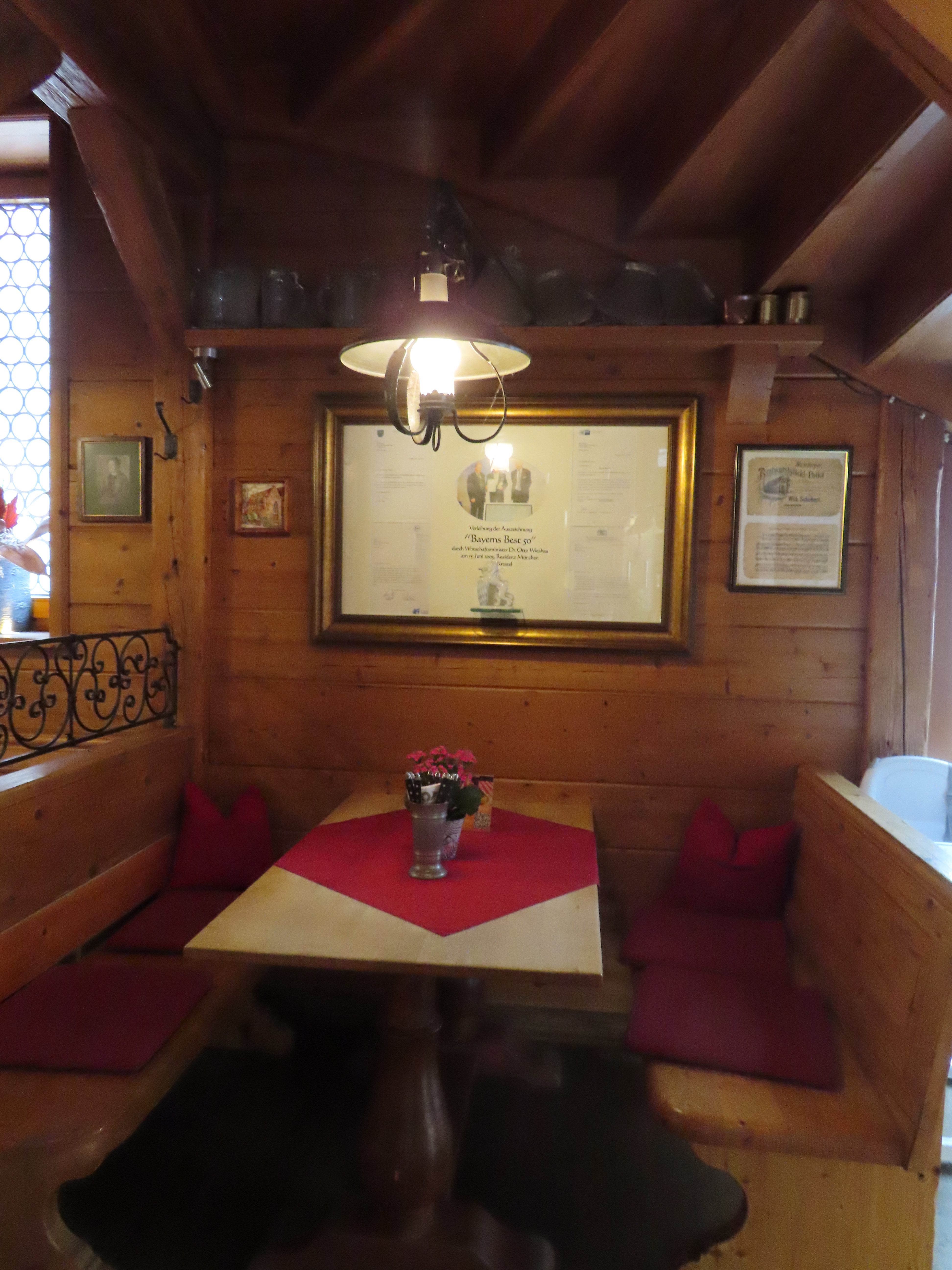
The Goldenes Posthorn is a traditional restaurant in Nuremberg’s Old Town, right next to St. Sebaldus Church. It was founded in 1498 and is one of the city’s oldest restaurants.
It was once an old wine tavern near a postal coach station, where coach drivers, travelers, and local people probably gathered to enjoy wine and warm meals and exchange news.
The building was destroyed during the war, but it was rebuilt on its original site.
I ordered a potato stew and a strawberry parfait.
“May I look around inside?” I asked.
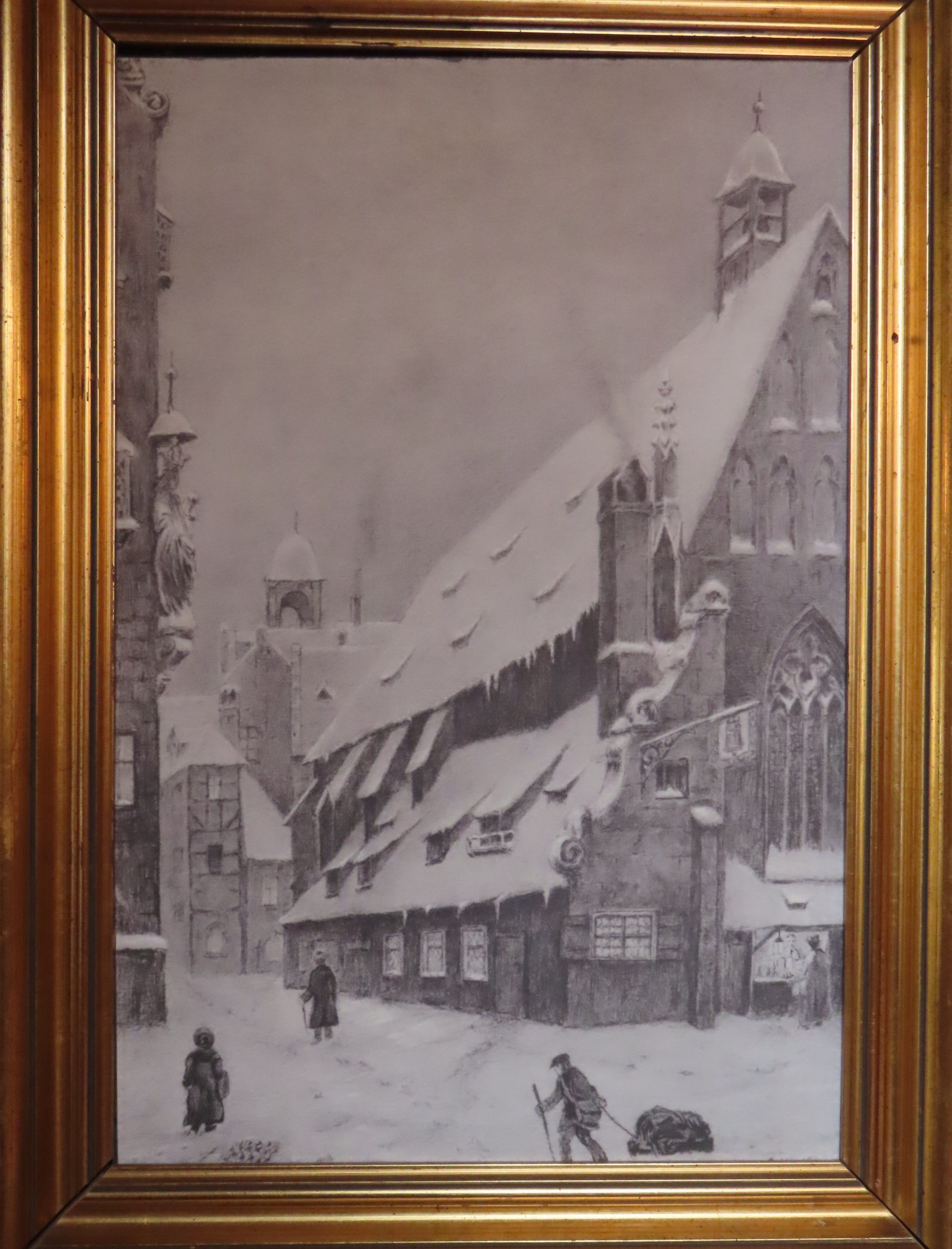
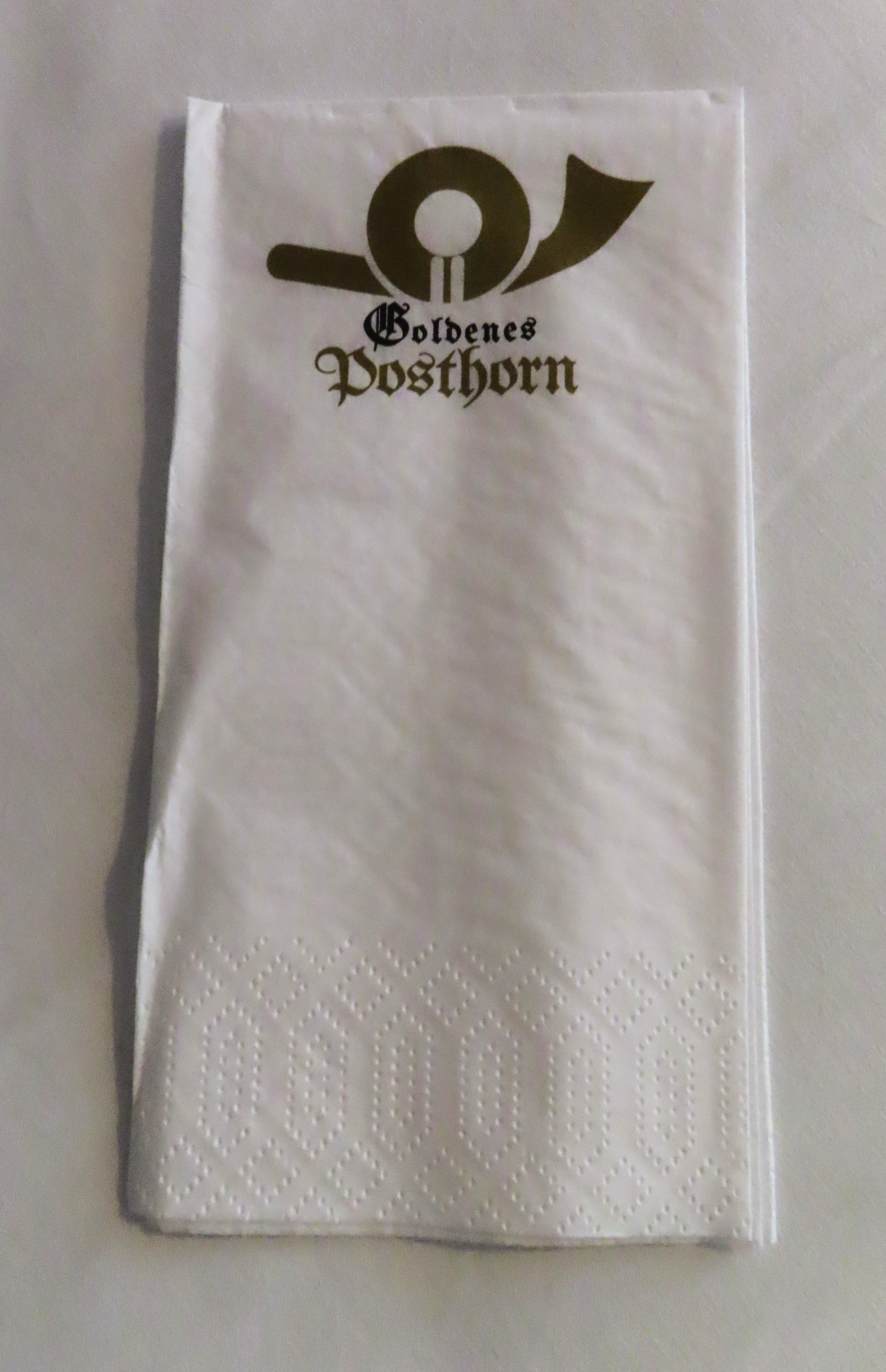
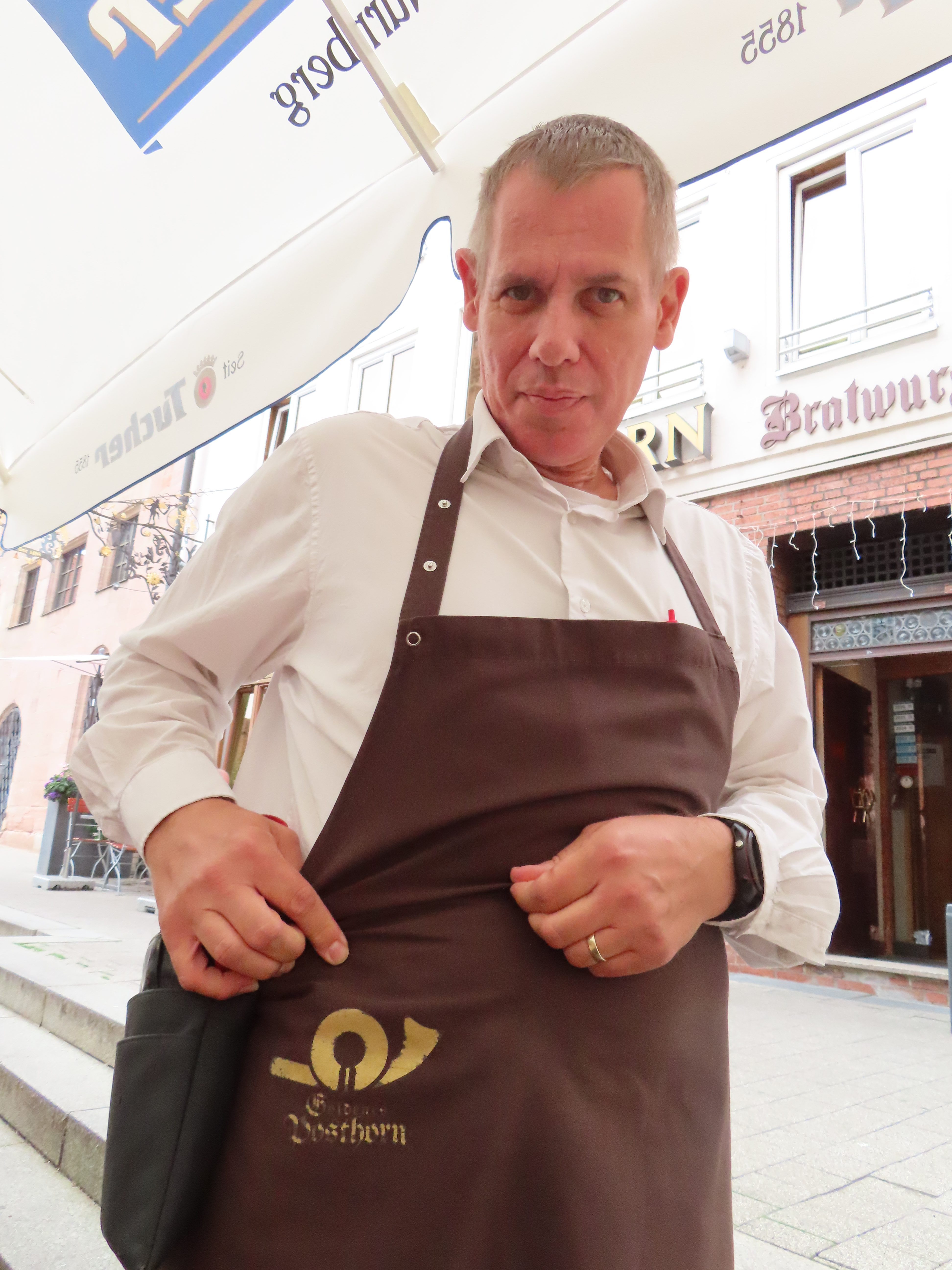
The staff smiled warmly and welcomed me. There were rooms on the ground floor, upstairs, and in the basement, divided into many smaller spaces. There were paintings on the walls, too. Even the aprons had little postal horns on them.
The church bells suddenly began ringing, loudly and repeatedly, for about five minutes.
I wrote “Ich bin glücklich” (“I’m happy”) in German on my notebook and showed it to the waiter. He was delighted, and we hugged.
“Go show everyone!” he said.
So, I showed the other waiters and waitresses my message. They were happy, too, and hugged me one after another.
I was glad Tim found the restaurant.
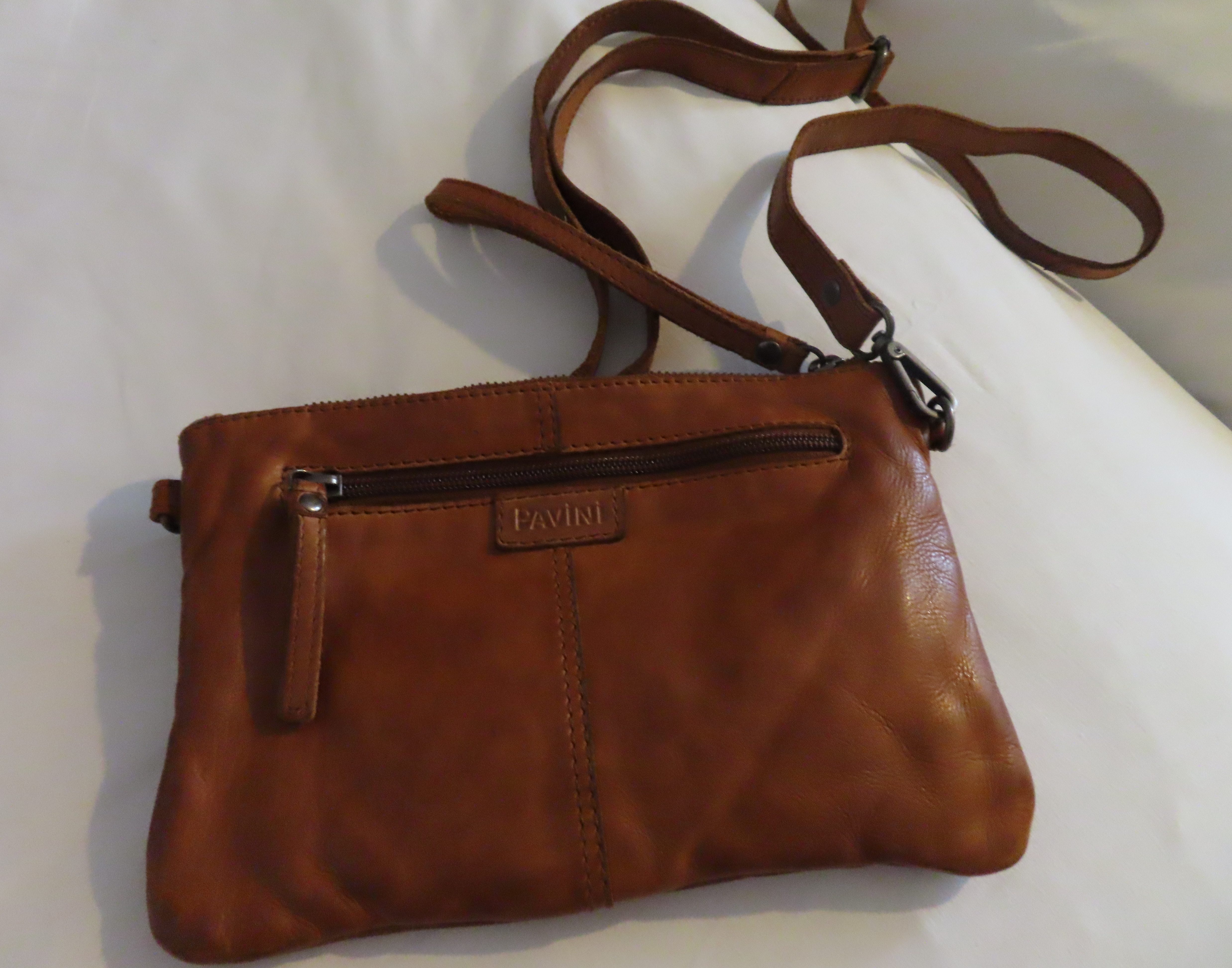
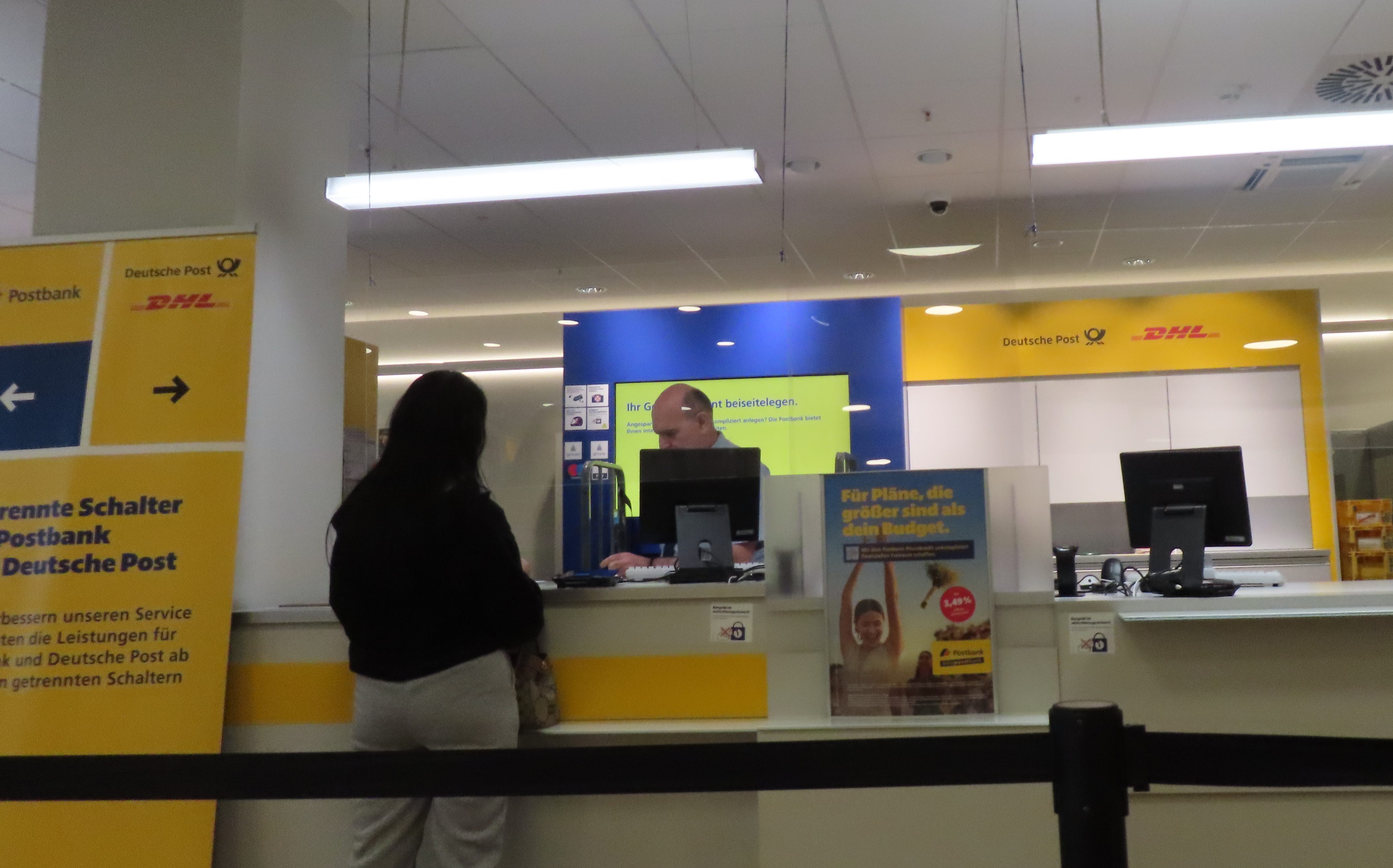
I bought a leather bag for Mom at a small store in the Handwerkerhof artisan’s market near our hotel. Then I went to a nearby post office to send it to her. There were four counters–two for the Postbank and two for postal service. People were waiting in two lines.
I chose the smallest box I could find for the bag. A clerk gave me a customs form. “Would you like tracking? It costs more,” he asked. “Yes,” I said. He prepared a yellow box, put the bag inside, and sealed it. The box was adorable, but I wasn’t allowed to take a picture of it. “I’m sending it to Mom,” I said. “It’s a good bag. She must be happy,” he said.
The box was small and light, but it cost about $60 to ship. It arrived at the mountain cabin, far from Tokyo, in just four days. Mom was very happy. She said she put the bag over her shoulder and kept going upstairs and downstairs with it, Laughing.
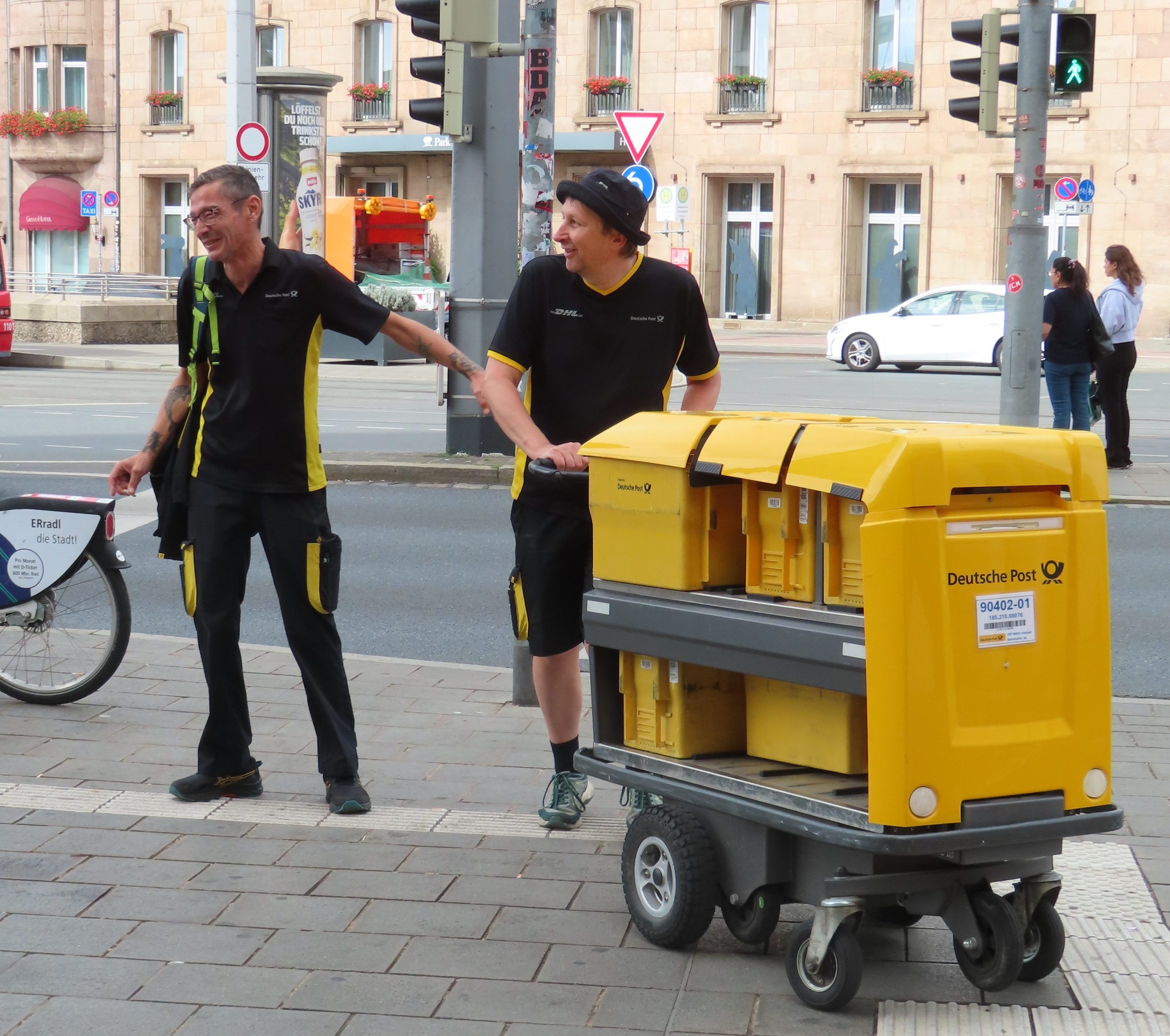
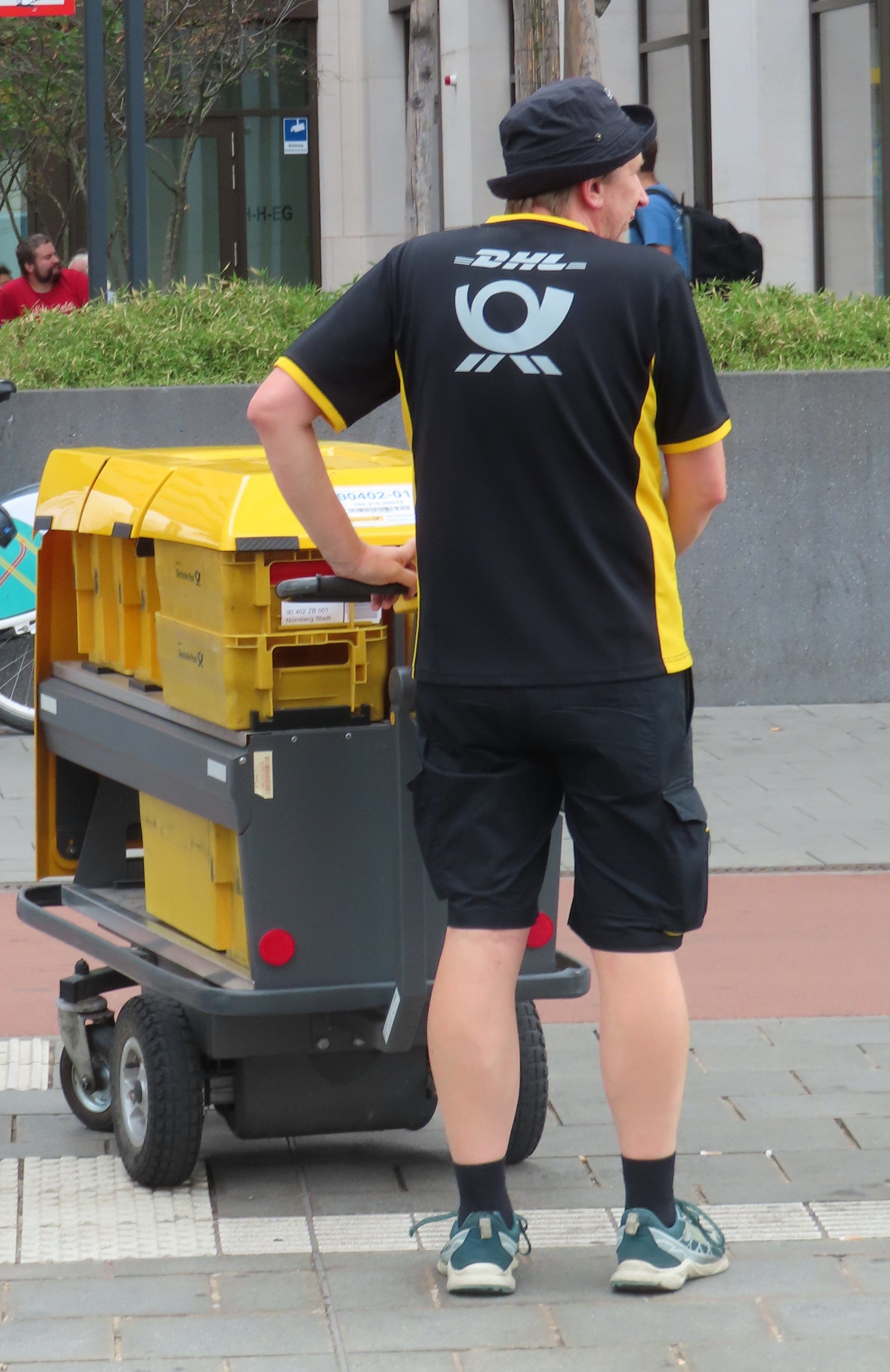
Around 3 pm, when I left the post office, I spotted a postal carrier who had finished making his deliveries. I guessed he was heading back to the post office.
“Danke schön!” I called, waving to him.
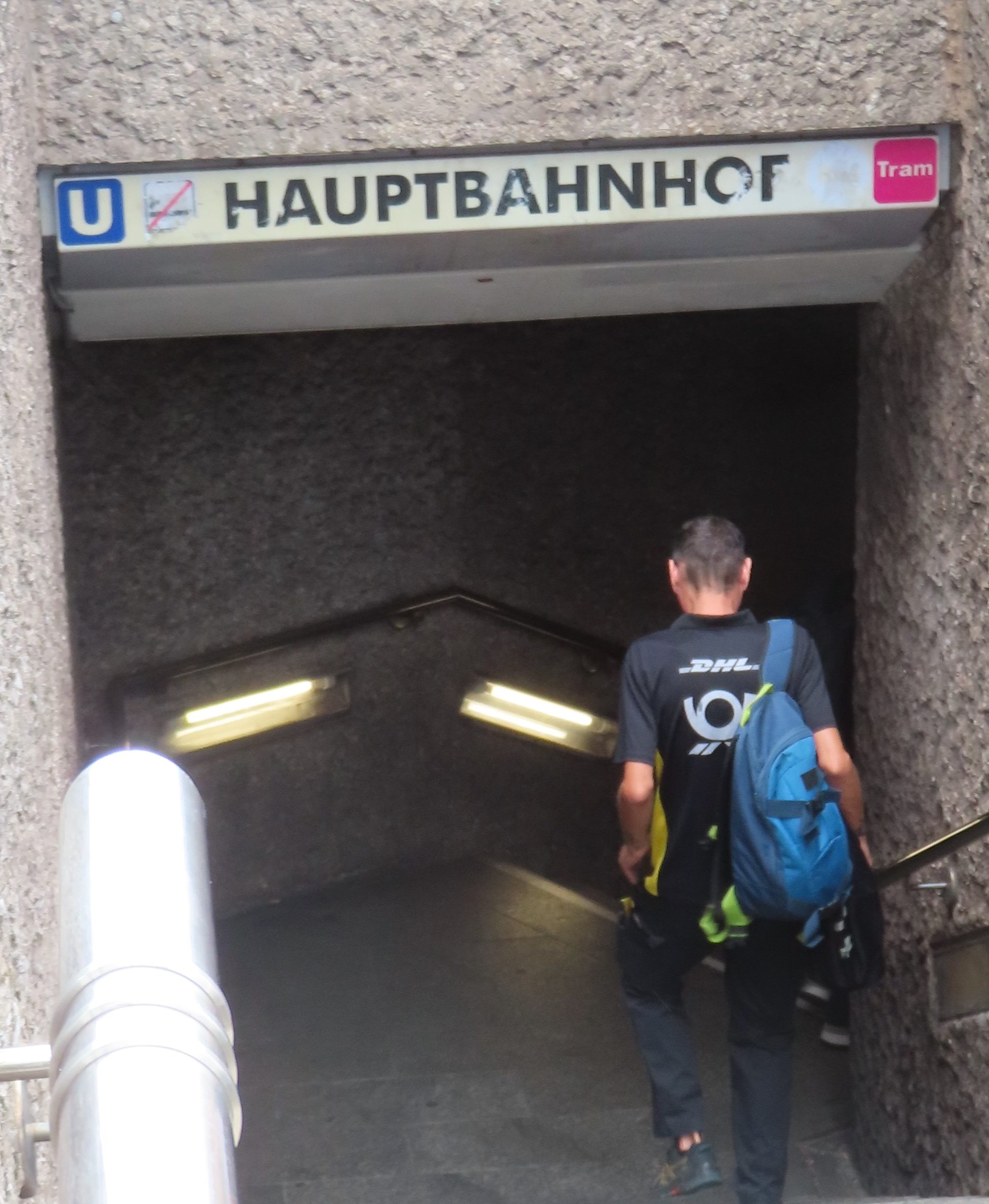
After crossing the intersection, he stopped to chat with a colleague who had also finished his deliveries earlier. He headed down into the subway station.
I waved to the carriers again and said, “Danke schön!”
I took a side street back to my hotel. Then a postal bicycle rode past me!
Nuremberg has a dark history, but I found it to be a warm and kind city. I was very lucky.
